

Exhale.

Words by Like the Wind · Photography courtesy of SALOMON
Two strangers meeting in Marrakech sounds like the opening lines of a movie script. Which, in a way, it was: two athletes coming together to run, to explore and to create a film. Two athletes who had been strangers yet felt like friends instantly. Two runners with different rhythms who found the same reason to lace up their shoes.
Although Lucy Bartholomew and Lydia Keating come from different worlds – Lucy from elite racing and Lydia from community-centred running – arriving in North Africa was, in both of their words, an invitation to exhale.

When the idea for the trip was initially presented to Lucy – a member of the Salomon International Trail Running Team – she had to figure out what was possible: “I wasn’t sure how it would fit into my [racing] calendar… but the world wanted me to go there and experience this trip.” Lucy’s motivation, in part, was to show that elite athletes enjoy running slowly, exploring different places and connecting with people.
For Lydia, there was a natural connection with Lucy: “We kind of immediately hit it off… the highlight was meeting Lucy and bonding with her and getting to share some moments on the gravel.”
The itinerary for the trip was packed with contrasting experiences: The pair would start in Marrakech’s chaotic Medina market. Then they would hit some gravel loops on the city outskirts, followed by longer, wilder runs into the Atlas Mountains.
Lydia is a New Yorker and spends much of her time training in the city. She seeks out gravel whenever she can, heading to the softer, unpaved loops in Prospect and Central Park to soften a training day. “When I go onto the gravel it taps me back into the joy of running,” she says.
Lucy, who competes at an elite level on the trails, is also a gravel runner. Not necessarily to avoid hard tarmac, but because gravel is both a physical substrate and a mindset. Gravel isn’t just found underfoot, it’s found on “mindless, meditative, wide-open trails…” where the pace is “conversational, relaxed”.
Lucy and Lydia sought out some of the best experiences Morocco had to offer. They ran at dawn through Marrakech, when market stalls were being set up and the city woke from its slumber. They picked their way along dusty gravel tracks. They stopped when the desire to take in the landscape hit them. One afternoon, after a long climb, they were welcomed into a mountain village where children chased a football and women served mint tea and fresh bread over an open fire.
Lucy remembers the scene as a very special moment: “We just asked for tea and were presented with dates, nuts and bread cooked over the fire. I walked into a courtyard and immediately thought: there are things more important than running.” Despite having another training session in her plan for that day, preparation for an upcoming race, she realized “This is why we run – to not run sometimes.”
“This is why we run – to not run sometimes”
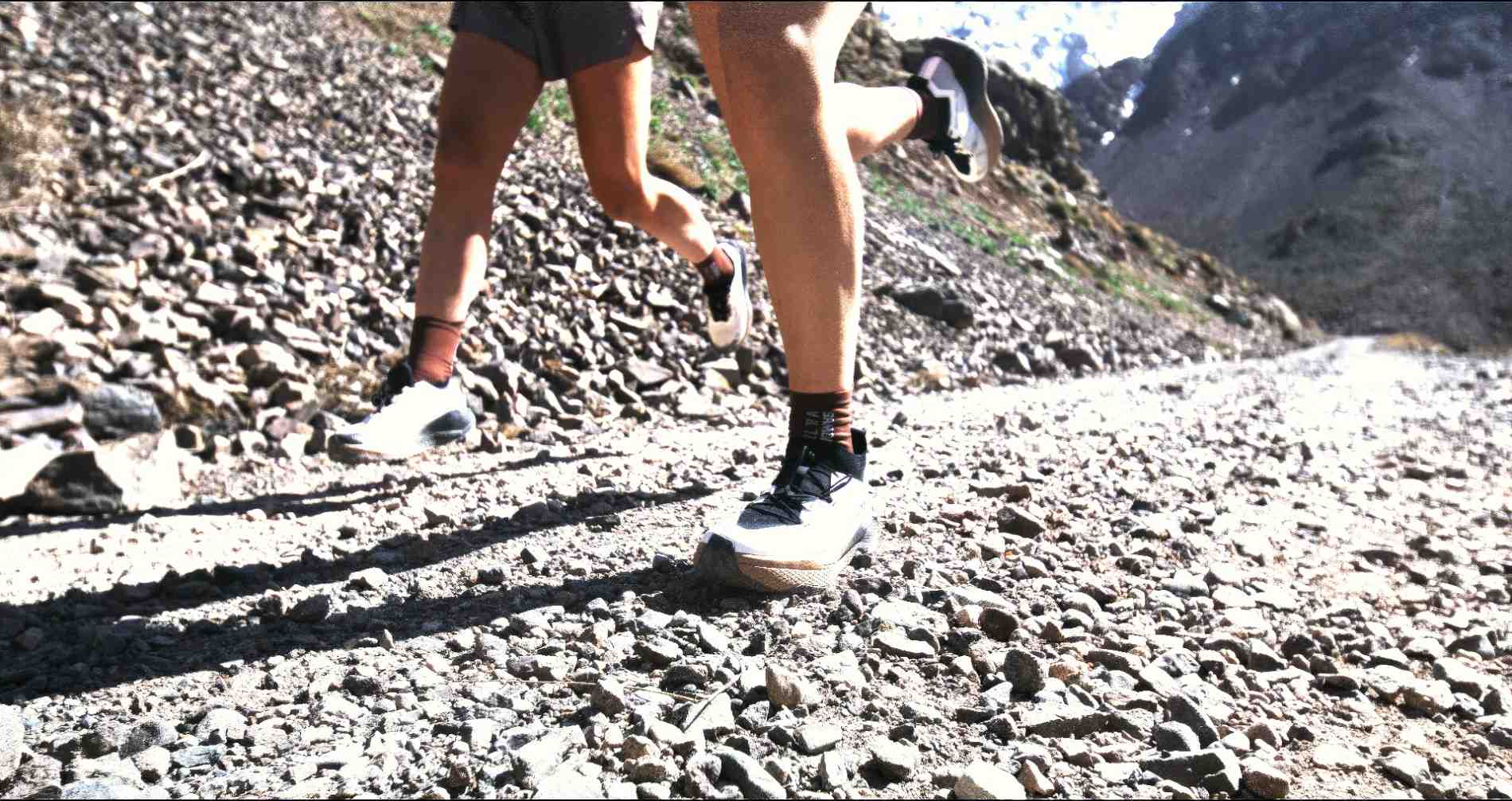
Those quiet, unplanned moments are beautifully rendered in the film. They reinforce the idea that running can open doors to new places and people. Lydia puts it succinctly: “Gravel reminded me I’m a recreational runner. That this is supposed to be fun.”
For both women, Morocco became a reminder of why they started running and why they are still runners. Lucy describes running as a life-long companion where training and racing are part of the journey but “the exploration and curiosity and empowerment and joy” are constant motivations.
As the trip continued, the visual splendor of Morocco kept appearing: The Atlas peaks, jagged and snowcapped; Valleys bursting with green plants after a welcome period of rain; the contrast between Marrakech’s bustle and the mountains’ calm. It all felt cinematic.
Marrakech was a world away from the places where Lucy and Lydia usually run – Lucy often alternates between road and technical trails at home in Australia. Lydia, who organises club runs and open-mic post-run storytelling nights in New York, runs predominantly on the city streets. But wherever they are, there is the appeal of gravel which, as Lydia puts it, is “about slowing down and connecting with where you are and who you’re with.”
In the film that follows their Moroccan adventure, there is an important, uncomplicated message: sometimes the best runs are the ones where you stop, talk, drink tea and engage with the places around you. Lydia explains it very neatly: the trip reminded her why she runs: for community, curiosity and the odd, perfect, unexpected pause.
Gravel is both a physical substrate and a mindset
In partnership with

salomon.com