

In the background, but not forgotten
Words by Like the Wind — photography by Precision Fuel & Hydration
As Caleb Olson jogged around the track at Placer High School to win the 2025 Western States Endurance Run, dozens of photographers and filmmakers followed him while the crowd on the infield and in the bleachers roared in celebration. Five miles earlier, far from the flash of the cameras, Caleb’s crew had met him at Pointed Rocks aid station. After his athlete had been and gone, Chris Harris allowed himself — for the first time all day — to think that something special might be about to happen.
As Chris talks about the crescendo of the Western States race, he gives off profoundly calm vibes — which is precisely what’s needed, when your job is supporting an athlete trying to make history. And it is harder than it sounds.
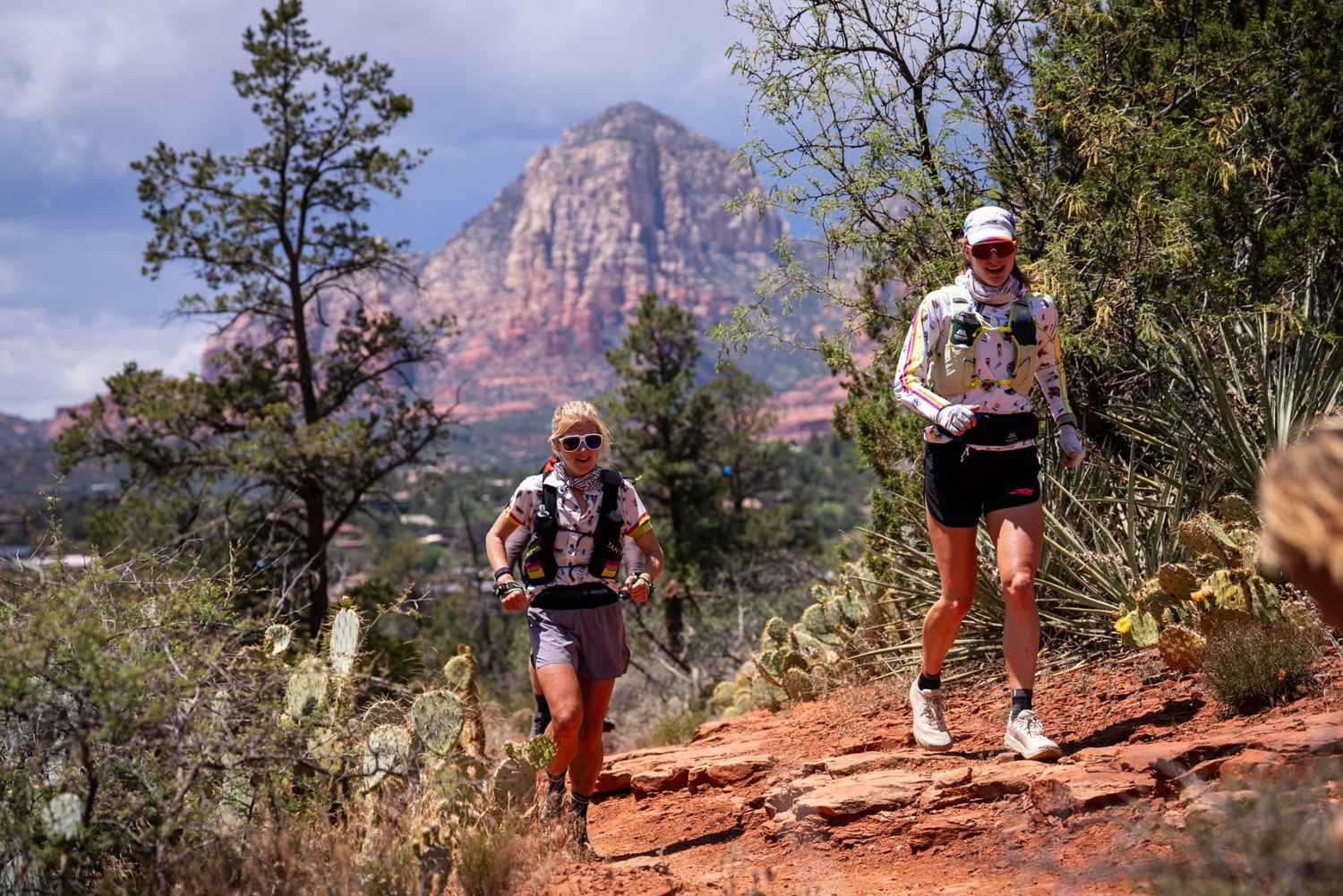
Chris works for Precision Fuel & Hydration alongside Emily Arrell. Both of them have some great stories about crewing athletes. Chris is an integral part of Caleb’s team, and Emily was part of the crew that supported Rachel Entrekin to her overall win and course record at the 2026 Cocodona 250, a multi-day ultra in Arizona. Between them, Chris and Emily offer a remarkably consistent picture of what it means to be in the background when an athlete is attempting something epic.
Emily and Chris are emphatic on one point: their work starts long before race day. Chris describes the process of pulling together nutrition data from shorter races, analyzing what an athlete actually needs in terms of carbohydrates, sodium and fluid, then mapping that onto the specific demands of the race. And it doesn’t stop there. Crews need to establish aid station locations, driving times, crew access points — all of it planned well in advance. Because on race day there is no time to figure things out from scratch.
“There is nothing new on race day,” Chris says.
The athlete’s kit choice, fueling decisions and protocol for what happens if the weather shifts are agreed upon and rehearsed beforehand.
Emily agrees, describing how, at one aid station during the Cocodona 250, Rachel arrived at an aid station shivering cold. Of course, the cold weather contingency plan already existed. Emily and the other members of the crew just had to execute it.
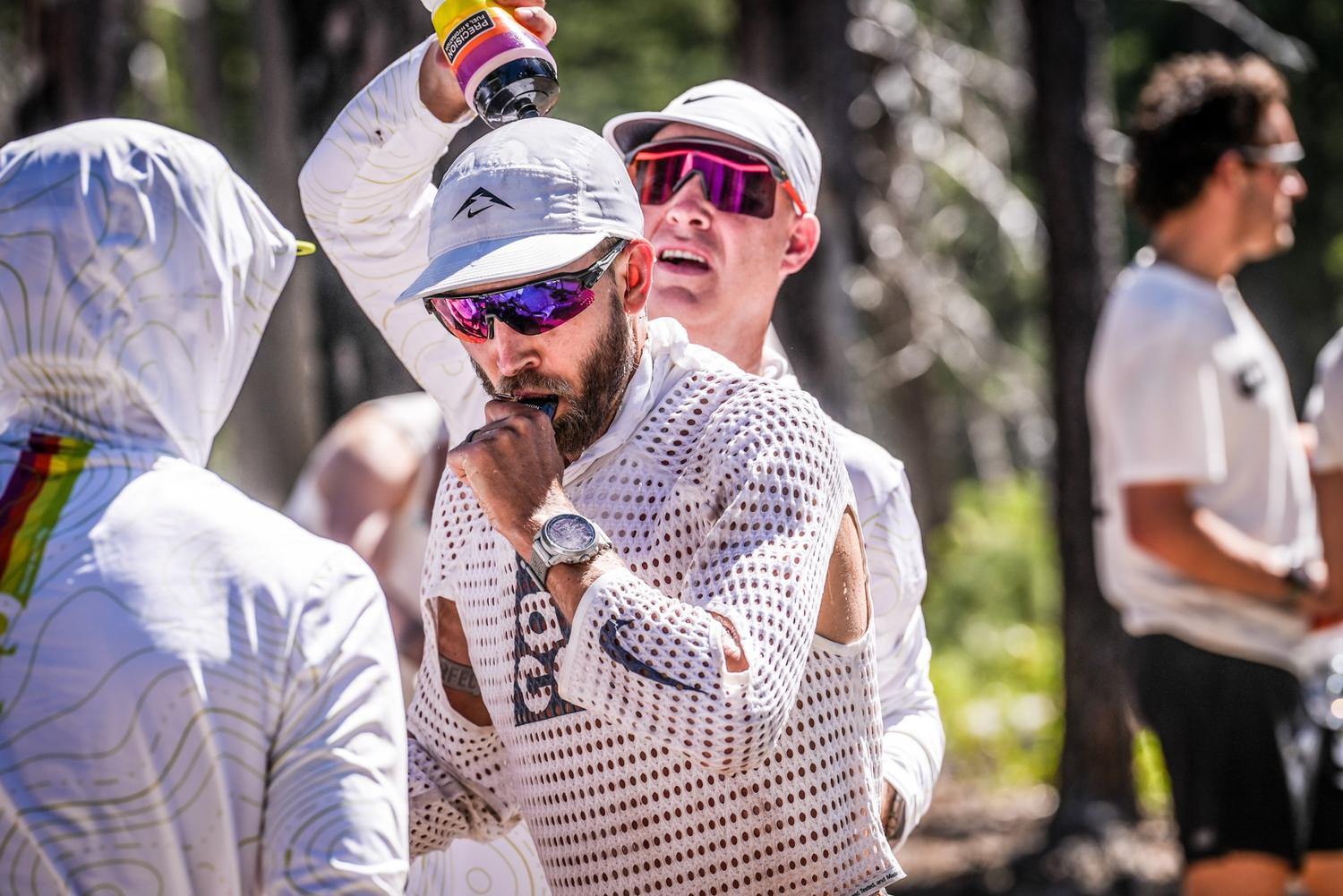
All the preparation is what makes the aid station pit stops possible. Looking at how crews behave when their athletes arrive, it is readily comparable to Formula One pit crews. Both Chris and Emily reach for that analogy themselves. At some aid stations — most notably at the Western States Endurance Run — athletes barely break stride. A bottle appears in one hand, gels in the other, an ice bandana around their neck and they are gone before the crowd has time to process what just happened. At the famous Forest Hill area of the Western States course, crew members can meet their athletes a mile before the aid station to strap cooling vests to the runners, which are then removed at the tent they have set up as the actual aid stop. Every second has to be accounted for.
Of course logistics, however meticulous, are only part of the picture. The other part is harder to systematize: understanding the athlete as a person and managing the emotional temperature of the entire crewing operation.
Chris is thoughtful about what he calls the “emotional decision making” that makes up part of his (and the other crew members’) role. This becomes especially true in the later stages of a race when an athlete is fatigued and communication becomes harder. There are many situations when an athlete hasn’t spoken to anyone for 35 miles then suddenly arrives at an aid station, with perhaps one minute to convey how they are feeling, what they are feeling and everything else that has been rattling around in their head for the past few hours. Sometimes what an athlete says — that their feet hurt or their stomach is off — is more a reflection of their internal monologue than a clinical assessment of their condition.
The crew’s job is to listen to the athlete’s words, interpret them and respond to what is actually needed rather than to their emotional weight.
Chris goes on to say that sometimes family members or close friends can amplify, rather than manage, the emotional volume. Chris sees his role partly as providing a calm, professional counterbalance. He approaches the time he has with the athlete in a measured, rational and informed way. And in the case of crewing last year’s Western States winner, he focused on what he calls “future Caleb” — the athlete who will cross the finish line — rather than the suffering person standing in front of him right now.
Emily describes something similar with Rachel at Cocodona. Rachel’s attitude and focus on her performance targets — as well as her indifference to her overall standings in the race until circumstances made them unavoidable — made the crew’s job easier. Rachel trusted Emily’s fueling decisions completely, eating what was put in front of her and even apologizing after the race for not finishing every gel.
Emily’s response was simple:
“It’s fine, you’ve won the race. I forgive you.”
The cliché — often repeated by people not deeply embedded in the sport — is that running is a solo endeavour. But races like Western States and Cocodona put paid to that idea. Caleb and Rachel are certainly under no illusions that they achieve their remarkable results without support. It’s just that most of the time the people who have been at every aid station, making decisions and offering exactly the right support, aren’t the ones in the finish line photos. Still, at least in Emily’s and Chris’ cases, they don’t seem to mind. And they’ll both be back for more.
In partnership with

precisionhydration.com
Instagram: @precisionfandh