

The World’s Shortest Marathon
Words By Like The Wind / Photography By Gracie Hinz
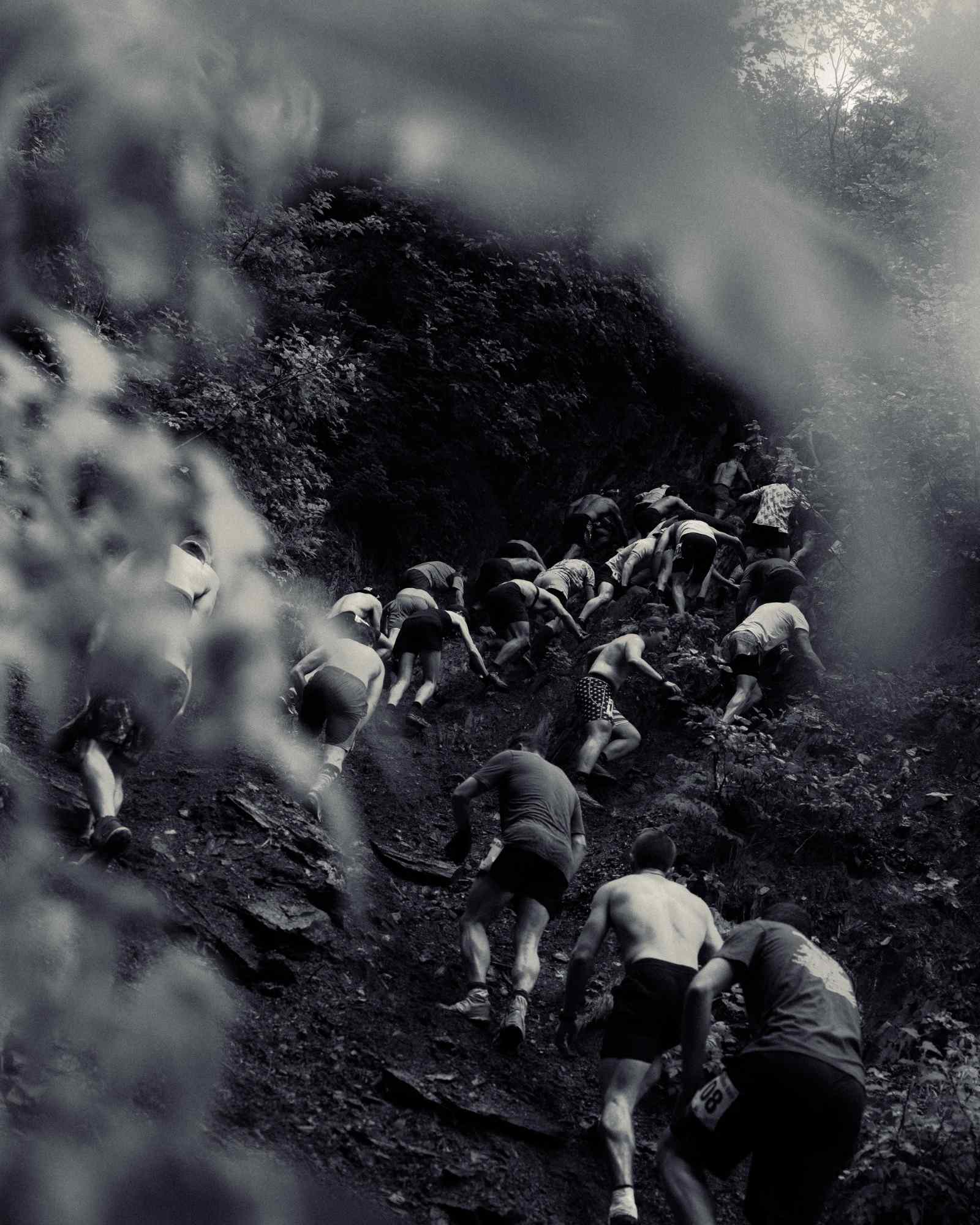
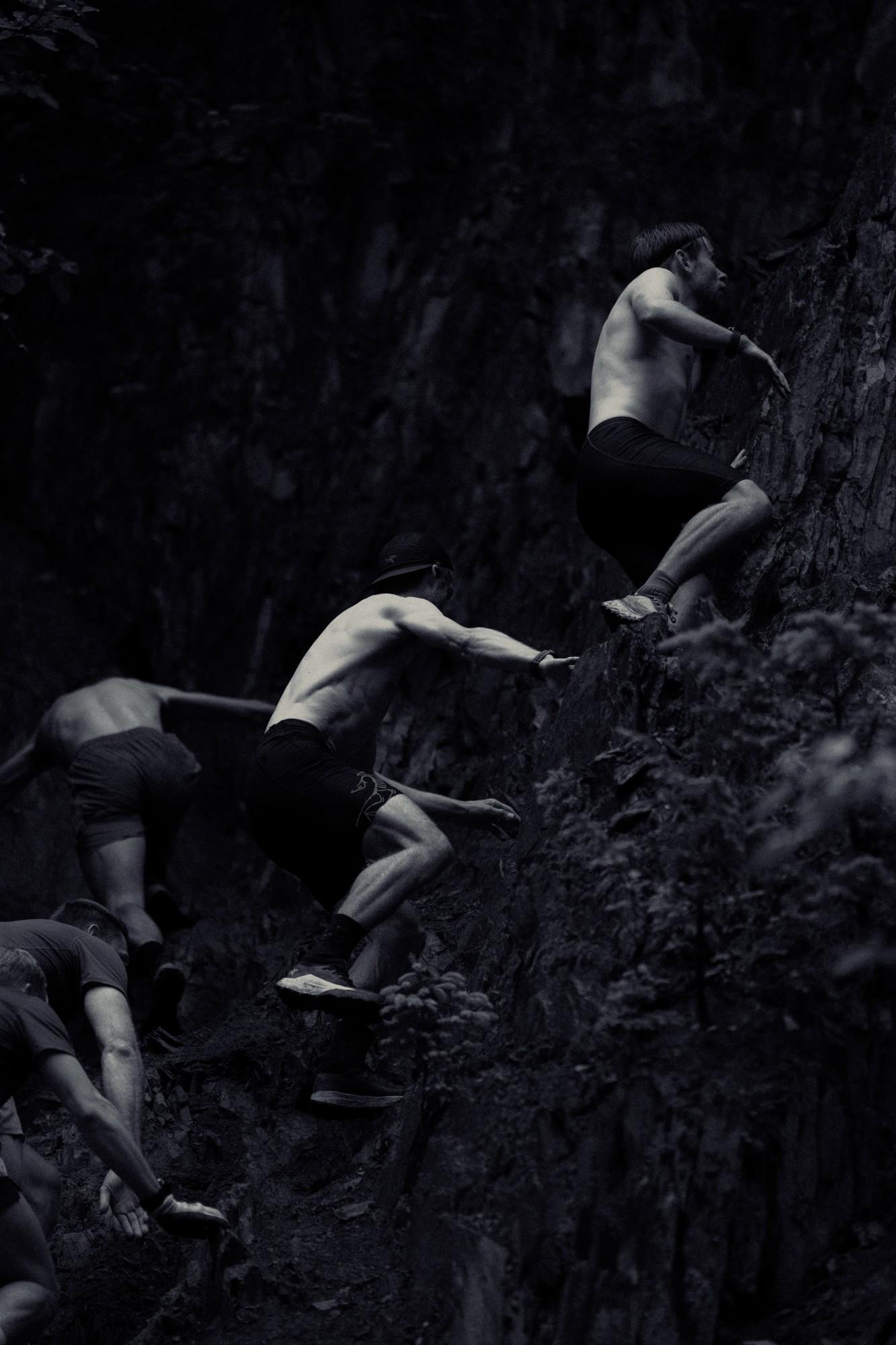
Even in the best weather, Mount Marathon is billed as the toughest 5K in the world. In the span of just over three miles, runners climb more than 3,000ft to summit the mountain and then descend, sometimes descending slopes as steep as 60 degrees. This Alaskan mountain, just outside Seward, is characterized largely by its loose scree and mud, elements that make running its trails a true challenge. So this year, when rainy and cold conditions were forecasted on 4 July (the annual date of the race, which is presented by Arc’teryx), one might have predicted that runners would bow out. But that would underestimate the amount of determination these runners possess. In order to race one of North America’s grittiest courses, an athlete must have a supremely strong spirit. And indeed, spirit is found everywhere at Mount Marathon.
Conceived in 1915, Mount Marathon holds the crown of the “oldest mountain race” in North America. Its beginnings, much like the race itself, are untraditional. Legend holds that two town locals gazed upon the mountain before them, each betting that they could beat the other in under an hour. The wager? A round of beverages for the crowd. The whole town showed up on 4 July for the race and witnessed the winner take his crown in 1h2m.
Mount Marathon still draws the attention of the entire town – and more. Seward is home to approximately 5,000 residents, which swells to more than 30,000 spectators and racers during the Fourth of July race weekend. Matias Saari, Mount Marathon’s race director since 2019, calls it “Alaska’s Super Bowl,” second in fame only to the Iditarod (the annual 1,000-mile Alaskan sled dog race from Anchorage to Nome). “You can’t really call yourself an Alaskan mountain runner without doing Mount Marathon,” Matias says, noting that the race captures the hearts of Seward residents, who each claim their place as racers, volunteers or vendors every year.
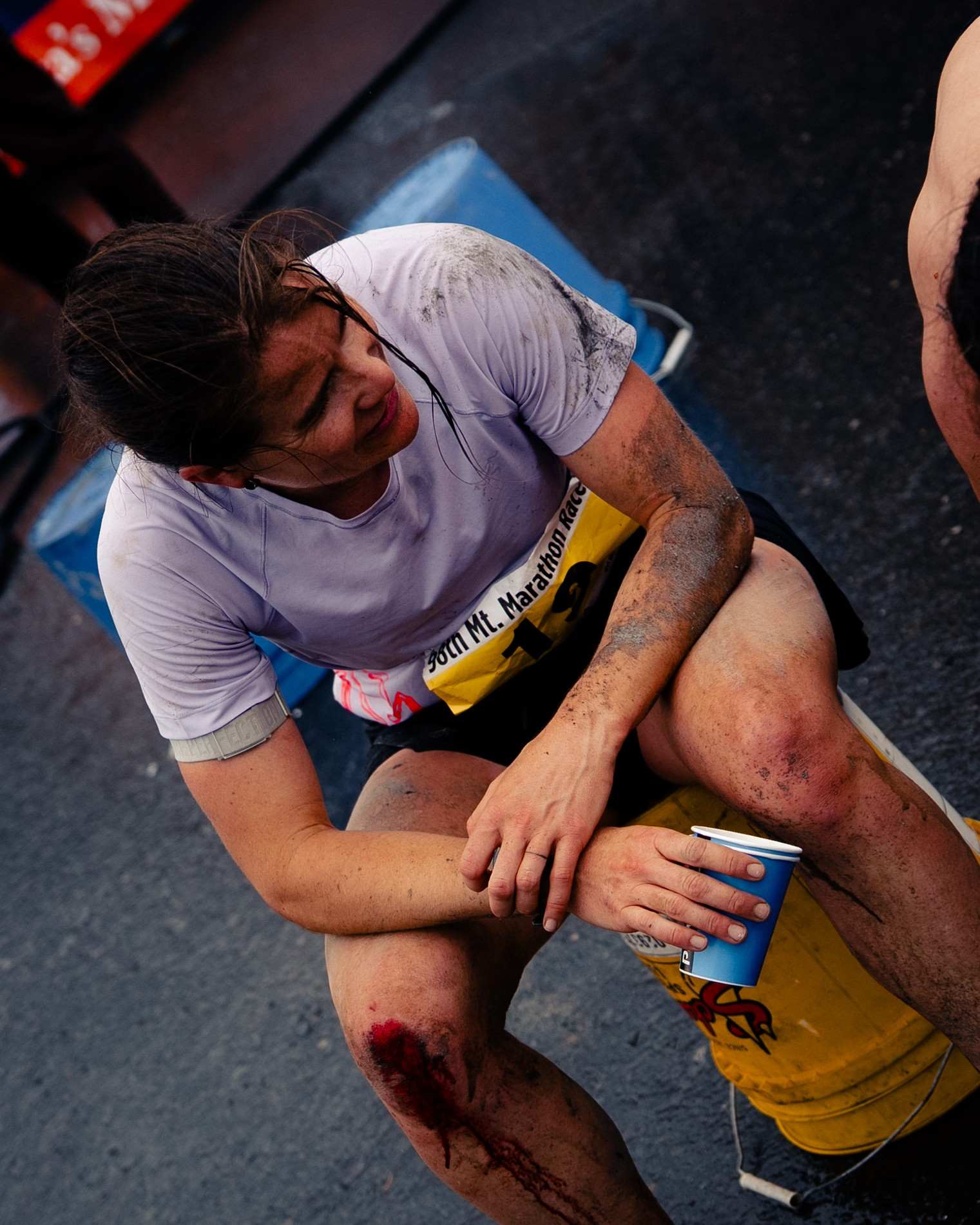
Mount Marathon’s mystique captures the minds of runners year after year. Many racers have participated in the race for over 20 years; eight runners have completed Mount Marathon for over 40 years; and one runner, Fred Moore, ran the race for 50 consecutive years. These racers bring their families and friends, many of whom end up racing themselves. This course beats people up, bloodies their knees, muddies their legs and keeps them coming back for years to come.
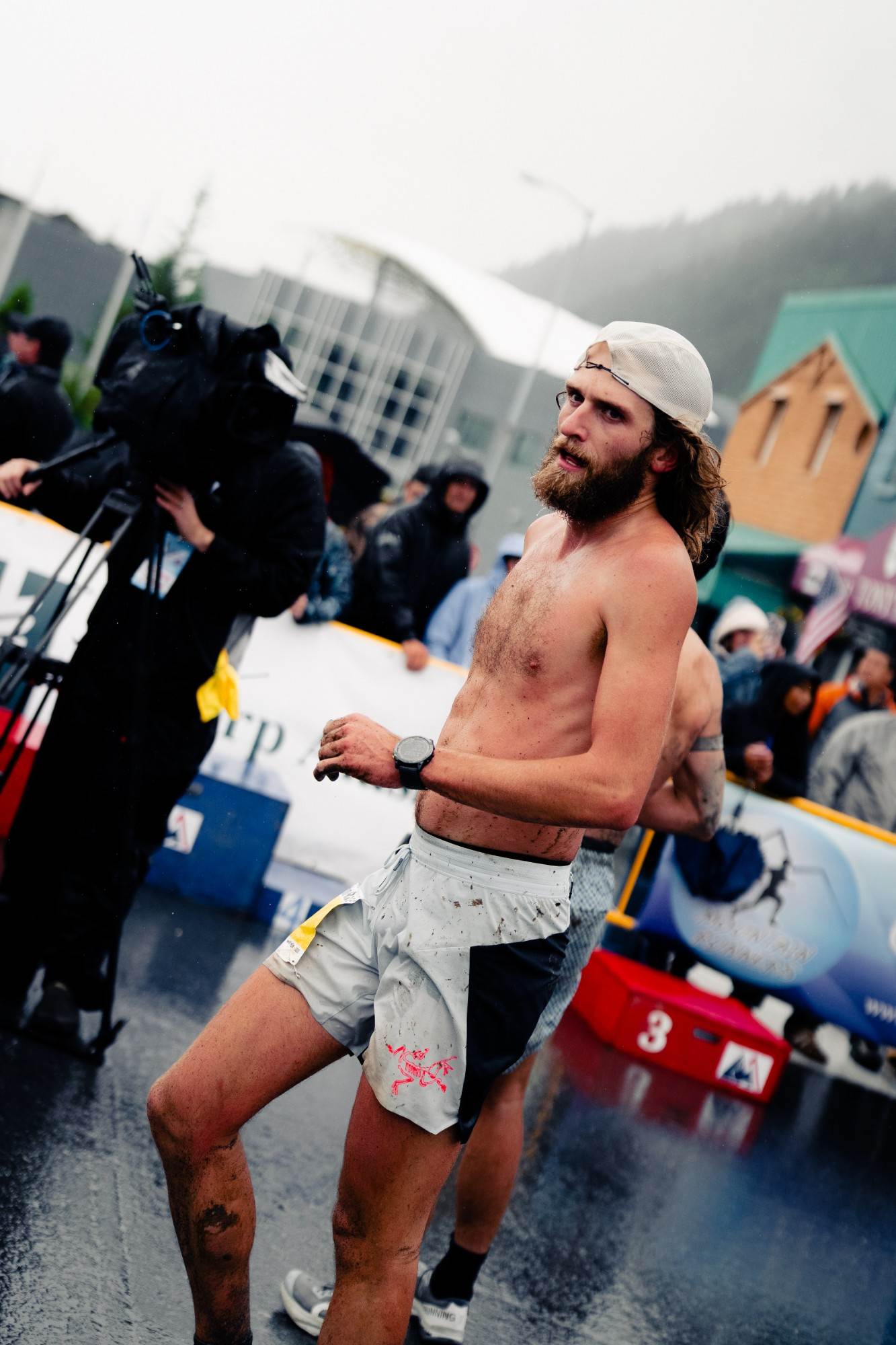
One of those returners is Arc’teryx athlete Jessie McAuley, a professional mountain runner from Squamish, British Columbia. Jessie was introduced to this race by his mentor, Nick Elson, who ran Mount Marathon in 2015, earning fifth place. Jessie’s first Mount Marathon was in 2019 and he was welcomed back in 2026 for his fourth – and most successful – race, where he flew through the finish line in second place with a personal best of 43m54s. Jessie is fascinated by the race’s changing conditions across the years, ever aware that his sport is influenced by the ever-changing and unpredictable climate. This year, the conditions were brutal. Strong winds, looming clouds and pelting rain turned packed dirt into mud and scree into slick rock. In lieu of discomfort, Jessie was curious: “The softness of the scree is impacted by how many avalanches run down the mountain in the spring and how quickly the snow patches melt… I was really excited to just grit my teeth in the wind.” And grit he did, flying up the steep and through the scree, cruising through the course that becomes more familiar with each passing year.
It was Jessie’s passion – and insatiable desire to continually learn and re-learn this race – that hooked Arc’teryx, Mount Marathon’s 2026 title sponsor. The brand – which is characterized by their commitment to the intersection of mountains, community and their athlete’s passions – found an authentic partnership with Mount Marathon.
“It’s A Rowdy, Primal Experience”
“It’s about finding if we are the right fit for the race, not the other way around,” explains Lucy May Bradshaw, Head of North American Communications at Arc’teryx, when reflecting on the brand’s sponsorship ethos.
The race threads through generations. Brent Hadoff, the great-grandson of the 1917 Mount Marathon champion, appeared as an honorary starter at the 2026 race. His great grandfather, Tom, came up to Alaska to work in construction, learned about the race and took home the 1917 championship. In 1963, Mount Marathon’s first female competitor, Jane Triggs, raced amongst the men. The first junior race appeared the following year, in 1964, on a shortened course which is still run today. Now, Mount Marathon holds unique men’s, women’s and juniors’ divisions, with wave starts, and mini races for 5-to-10-year-olds. In 2024, the race welcomed a non-binary division, complete with its own results and awards. Each racer starts under the looming mountain, adding their name to the lengthy history of runners and Mount Marathon hopefuls. After the race, awards are handed out to winners of each division and age group, along with recognition for longevity. The race celebration continues with a post-race gathering, complete with an Alaska pig roast, giving the runners ample time to share the camaraderie that can only be built through grit.
Mount Marathon is untraditional, though it is rooted in tradition. The race is renowned for its singularity, its roughness, its remoteness. The course can only be truly known and appreciated by those who test their bodies and minds on its steep grades and sharp edges. Coming in as the title sponsor, Arc’teryx listened to Mount Marathon’s stories. In conversations with Race Director Matias Saari, the brand’s team heard a need to make the race more spectator-friendly for the growing number of visitors, fans and race-hopefuls. Since becoming involved in the race, Arc’teryx has also designed the Vertex Speed – a running shoe built to tackle technical vertical terrain like that found at Mount Marathon.
Since the course was actively streamed for spectator view, those watching could start to understand the feats that the athletes were experiencing just a mere 2 miles – and 3,000 feet of gain – away. The crowd watched in awe as racers came flying down the finish, coated in mud and blood. One such racer was Emma Cook-Clarke, a professional runner for Arc’teryx, who claimed fifth in the women’s division. “We prefer to define ourselves as people who love to move through the mountains and move through terrain efficiently,” Emma explains when asked about her attraction to this wild race. “This is playing for adults, and to do that on a mountain with 1,000 other people, that’s a dream.” Emma, like Jessie, raced the Minotaur SkyRace only a week before Mount Marathon. They both ran a shortened distance in the Minotaur to keep their minds and bodies fresh for their upcoming test in the Alaskan wilderness.
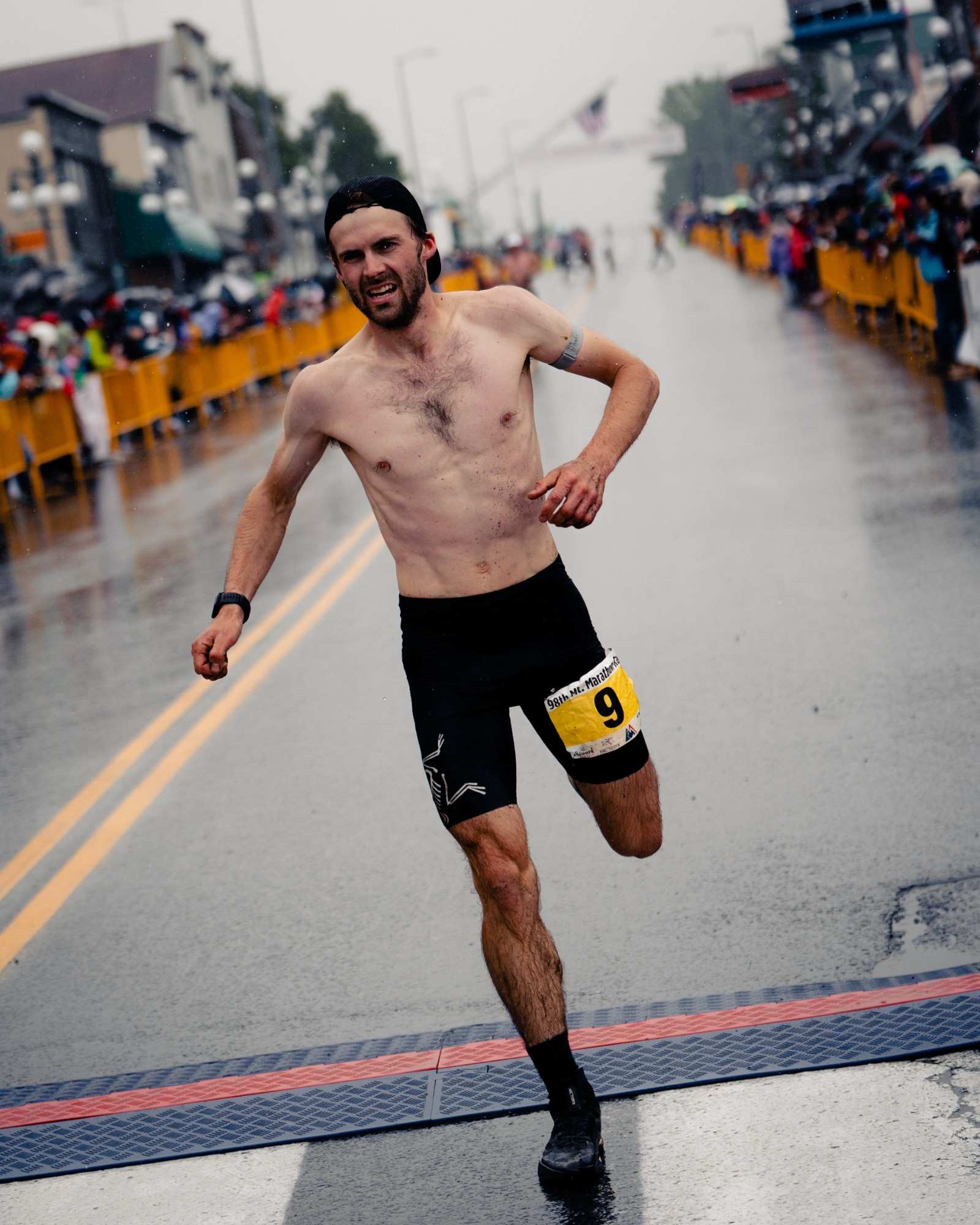
Kyle Richardson completed the Arc’teryx athlete team on the course. Hailing from Boulder, Colorado, Kyle has a fascination with wild, steep terrains, which is reflected in his multitude of FKTs at Longs Peak, an iconic 14,000ft peak in the Colorado Rockies. This race was Kyle’s first at Mount Marathon, but will decidedly not be his last. “You do it once and you want to come back immediately,” he says. Kyle felt the race’s magnetism while grinding up a treacherous, technical slope on the course. “It’s a rowdy, primal experience,” he explains.
Independently, at the end of their races, each athlete spent time reminiscing the course and gazing upon the mountain that they had summitted. It called into their minds, lived in the fatigue draining from their legs and drew an undeniable urge to try again. As racers, runners and individuals curious about testing our physical and mental limits, we are all familiar with the call of wild spaces and discomfort. We thrive in the vulnerability of trying, testing ourselves, asking ourselves for more. Mount Marathon is the raw manifestation of human grit. The race may grow and change over time, but the essence of the mountain spirit remains the same.
In partnership with

arcteryx.com