

Being the Change
Being the Change
Words by Like the Wind – Photography by Tanya Raab
Ultra Trail du Mont Blanc (also known as the UTMB) is like the Super Bowl or FA Cup Final of trail racing. It brings together many of the best trail runners in the world, who want to test their mettle on the iconic route through the Alps. It garners worldwide attention and vast amounts of press coverage. The trail-racing series is undoubtedly epic and renowned, but many within the trail community have noted that its participant demographic has long been primarily white and male — the global majority (the vast majority of the world’s population who are non-white) is noticeably the minority in Chamonix during race week.
So, this year, seven Black women representing UK-based charity Black Trail Runners (BTR) raced at the UTMB. They ran to experience the magic of the French, Italian and Swiss trails surrounding the Mont Blanc massif; they ran to challenge themselves on a world stage; they ran to be part of one of the world’s most prestigious trail running events. But also, they ran to bring representation and visibility to UTMB’s global stage.
“People certainly noticed our presence,” says Grace Natoli, a BTR runner who raced Experience Trail Courmayeur (ETC), the 15km distance. “We went there with a mission to make a point that we deserve to be in these spaces and I think we very much succeeded in doing so.”

At this year’s UTMB, BTR members stayed busy. The races were especially challenging for all runners because of dramatic weather and last-minute course changes – plus, BTR members also had to juggle participating in panel discussions, attending events, launching their ’Here For The Women’s Race’ partnership t-shirts with the Women’s Trail Running Fund and more.
Rebecca Devereux, a BTR member who ran the 50km OCC race, had thoroughly researched the course before racing: she watched videos, mapped out checkpoints and planned her fueling accordingly. But the day before the race, she found out that the course and start time had changed for OCC due to weather. She spent Wednesday night reworking her plans to fit the new course layout and timing, ensuring she was ready for the altered conditions on race day. Regardless of the change, she said she finished the race feeling strong, which was her main goal – along with teaching her young children, who attended her race, how to push through and not give up during difficult situations.
BTR’s co-founder and COO Sabrina Pace-Humphreys had also diligently prepped for her UTMB 100-mile race – she even slept multiple nights in an altitude tent during her training cycle and did a multi-day solo backpacking trip along the UTMB course last summer. She controlled every controllable factor she could – but the weather had other plans. Alongside other UTMB runners, Sabrina battled through rain, snow and muddy trails during her race, as well as severe energy depletion and constant pressure of tight cutoffs. She pushed through with the support of her crew and made it to about 80 miles until she was ultimately timed out before completing the full loop. Even as she processed the personal disappointment of not finishing, Sabrina says she found pride in her effort, as well as the representation she brought to the event and the sense of community she experienced.
Despite each BTR member’s desire to finish their races and succeed, the women shared the sentiment that the end results didn’t matter as much as the journeys to get there. “Not everyone’s journey was exactly what they expected,” Rebecca says. “But that doesn’t really change anything. Because that wasn’t what was important. I don’t think the outcome was actually the important bit – the important bit was experiencing it and representing, and we all did that. And we did a really good job of it.”


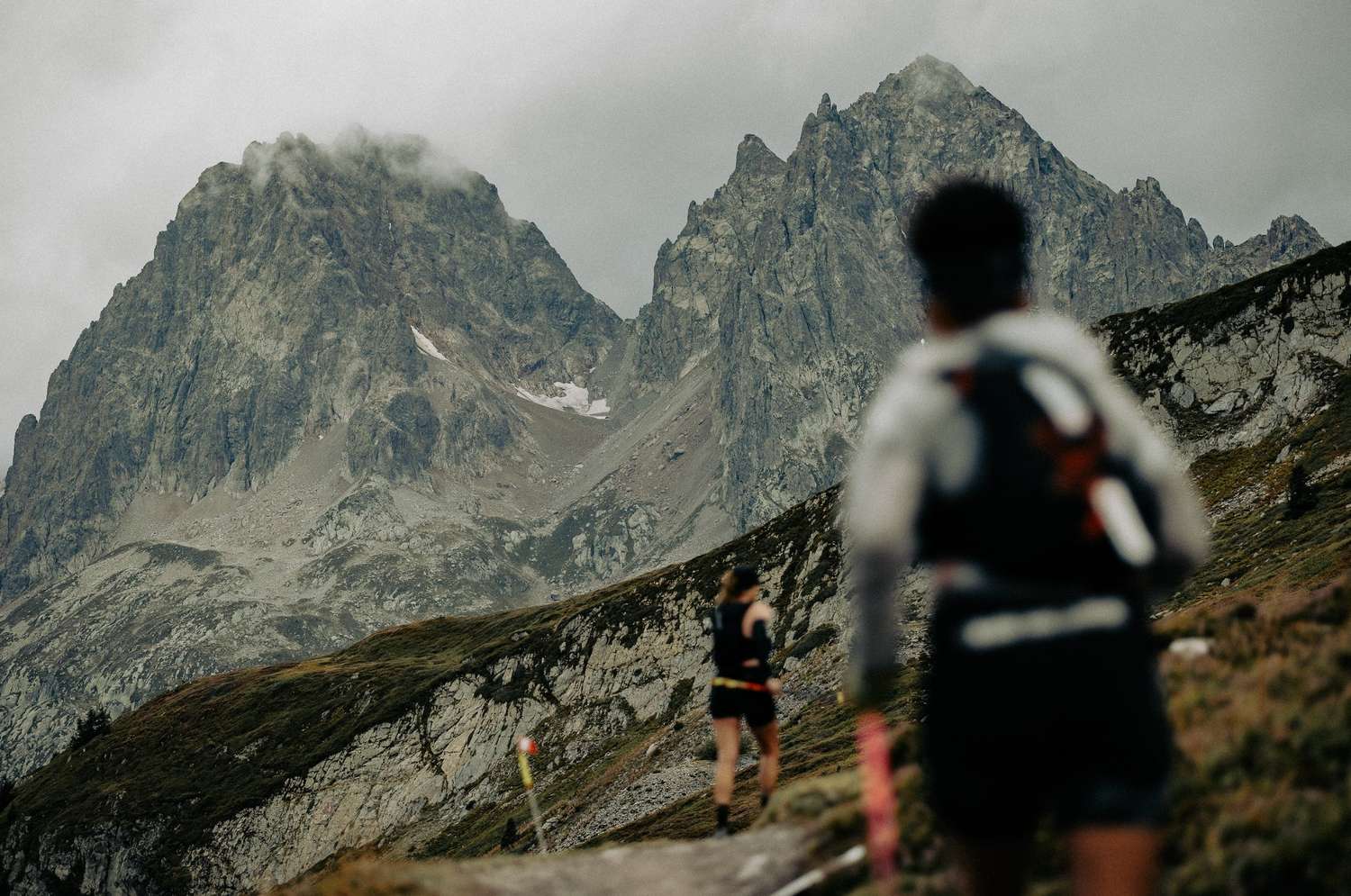

Each of the seven BTR members who raced at UTMB earned their spot there, Sabrina says. They were selected to participate in UTMB, OCC, CCC and ETC through the lottery. They completed the necessary qualifying events and they paid to be there.
“It’s difficult to put into words what it means to have the privilege of working to be in that position, because nobody handed it to us,” she says. “I feel as though we really turned up authentically as our full selves and showed who we are and what we do.”
When it comes to being a woman of Black heritage, representation is important across the board, Sabrina says. It’s important as a runner, as someone who holds an executive position on a charity, as a coach, as a community builder and as a mother. Racing at UTMB and exemplifying intersectionality is important because it allows onlookers to see themselves reflected in spaces where they have historically been underrepresented; it challenges stereotypes about who belongs.
“This is just one launch pad,” Sabrina says. “It’s how we extract value from this experience going forward that will continue to lead to change.”
BTR has already seen their impact begin to flourish. On a personal level, Rebecca’s children have joined fell running clubs and they ran in UTMB’s kids’ race during race week. Her 11-year-old son Walter is already trying to decide whether he wants to race OCC or CCC one day, and her seven-year-old daughter Etta has already begun to understand the semantics and logic of ultra-running – while following a runner’s 100-mile race during UTMB week, Etta proclaimed that he “only had 42 kilometres left, which is only about a marathon – it’s not that far.”
Grace Natoli’s grandchildren have already begun to ask her to take them running in the mountains when they’re older – they tell her frequently how “cool” they think their grandmother is. “I do it for the young people, for the aspiring athletes, for people who never even thought about it, for those who have doubt within themselves,” says Grace, who ran ETC this year for the second time. “It’s about making sure that others can see what’s possible. It gives them a bit of a thirst to do something similar.”

Sabrina received hundreds of messages from supporters after her race, validating the efforts of BTR’s presence at UTMB. Now, she is hearing that more BTR runners and people of Black heritage want to join in BTR’s journey to UTMB next year. She believes that BTR’s presence at the event will only continue to grow thereafter. Personally, she says, she will return to UTMB as soon as she receives another spot in the lottery to take care of unfinished business.
The impact of BTR’s presence at this year’s UTMB has continued to grow and it likely won’t dwindle any time soon. Besides providing co-branded kits and amplifying BTR’s work on social media, adidas TERREX also hired photographer Tanya Raab to capture striking images of the BTR team at UTMB. At the same time, filmmakers Carrie and Tim Highman of Dream Lens Media followed the BTR runners throughout the week to document their journey. Together, Tanya’s photography and the forthcoming documentary tell a powerful story of BTR on the trails – one that highlights the joy, grit and diversity of its runners. For Sabrina, this storytelling goes beyond documenting an event: it’s about building a legacy, raising visibility for Black trail runners and inspiring others who might not have seen themselves represented in the sport to feel that they belong. The film, which was not yet named as this article went to print, is set to release at the end of 2025 and aims to carry that message even further.
There was a stark difference between Sabrina’s first UTMB race week experience in 2019 and her most recent one. In 2019, she went alone as a woman of Black heritage, searching for others who looked like her and not finding them. This year, she was surrounded by a supportive community of Black women and, together, they showed that they belonged, claiming space with purpose, passion and potential. She said sharing the experience with a community provided a safe space to fully embrace and enjoy being people of colour on the trails.
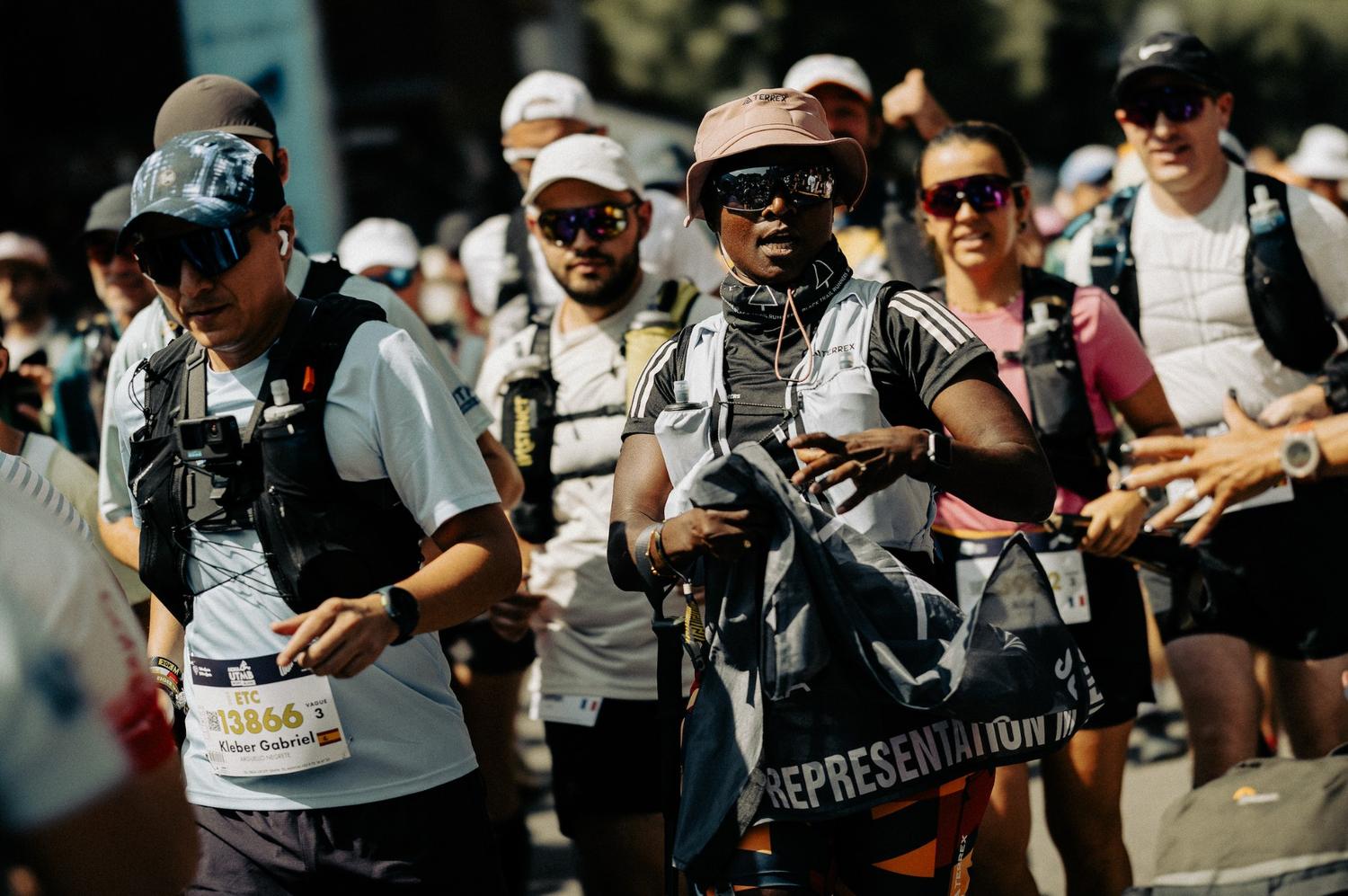


BTR hopes that in the future, UTMB and other race organisations will continue to build on efforts to make race environments more inclusive and accessible to people of colour. BTR has long advocated for races to track ethnicity data so that it can be easier to see growth and to implement strategies that encourage broader participation. Acknowledging that there is still work to do around representation is the first step, according to Sabrina. Then, learning how to solve it and taking action is the next step.
“If people were not looking or listening to us at UTMB, then they’ll get left behind,” Grace says. “We will continue to move forward, to make things happen, and continue our partnerships with brands who want to take intentional action. Onwards and upwards, we will continue on this journey.”
In partnership with
