

Don’t Call It a Comeback
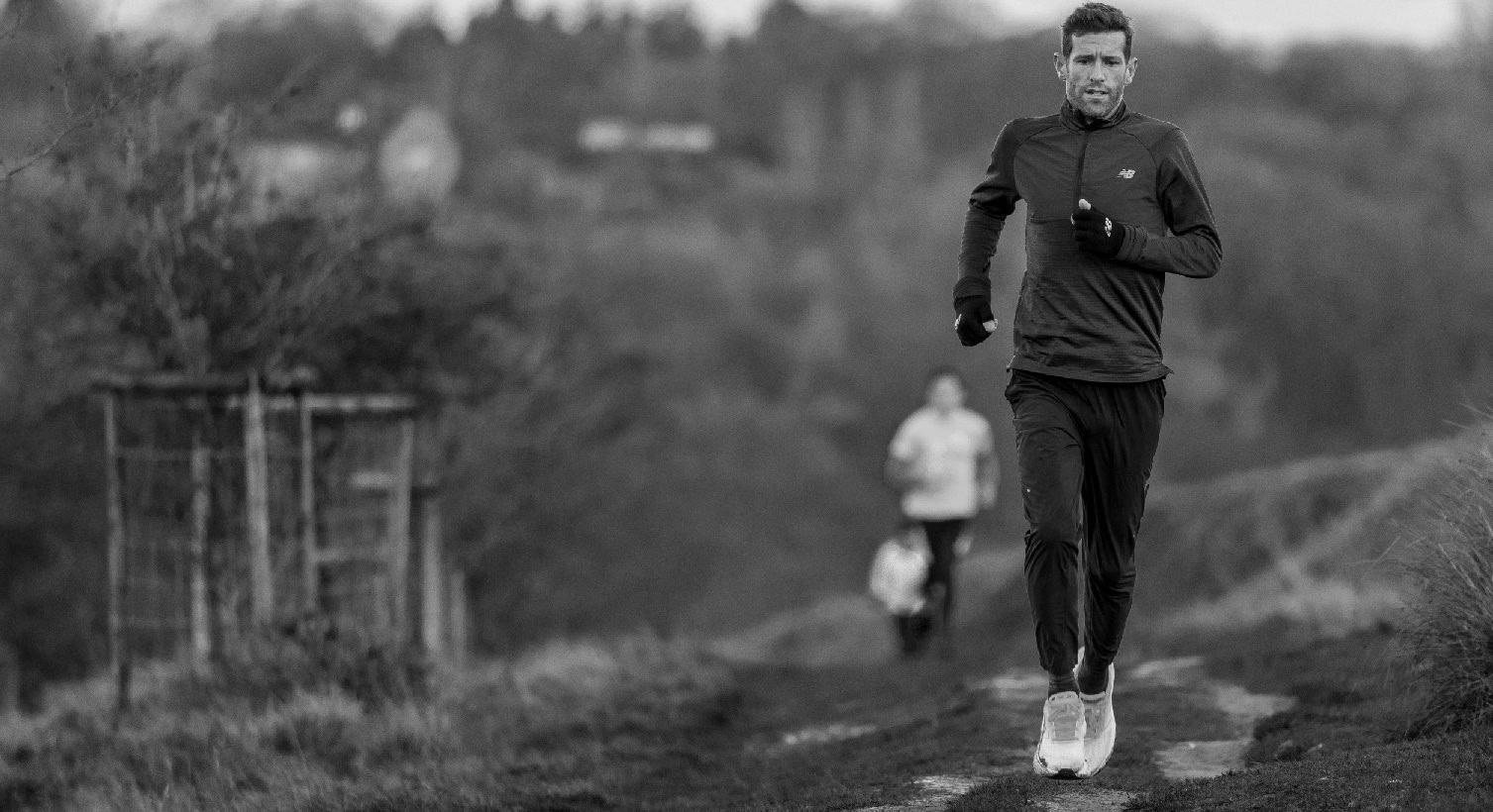
Words by Like the Wind – Photography by David Murch
Sport, at the top level, is all about controlling the controllables. The best athletes in any discipline have mastery over as many of the different elements that make up their sport as possible. Perfect preparation, rest, rituals, kit choices, psychology, psyching out opponents… it’s all a game of bending reality to the athlete’s will.
But there will always be some things that are outside of an athlete’s control. Take the weather, for example. When it comes to road racing, the conditions on race day can be unforgiving — something Jonny Mellor experienced firsthand at the 2025 London Marathon.
At around 20 miles, Jonny dropped out of the race. It was the first time he had not finished a 26.2-mile race in his professional career. Understanding why the race had gone so wrong was essential if Jonny was going to bounce back, but it was a complicated knot to untangle.
“It was very strange, because I’d never been there before,” Jonny says. “I stopped and everyone sort of went quiet. Then I carried on running a bit and everyone watching gave me that ‘well done, keep going’ sort of clap.”
An intense heat was bouncing up from the tarmac. Jonny had been feeling nauseous before he started vomiting. And now he faced the indignity of the crowds lining the route, offering him their sympathy. Enough was enough.
“I got around the corner to see a big sign saying, ‘Elite drop out’,” he recalls. “And one of my friends who I compete against was standing there. He’d dropped out. I just thought, ‘I’m done.’ The thought of going another six miles… I couldn’t do it. I just couldn’t pull myself through it, being sick in front of everybody the whole way around. I just couldn’t do it to myself.”
Jonny climbed into a minibus for the elite athletes who’d chosen this point to drop out. Alongside his friend, Jack Rowe, was one of the pacers for the elite women’s race, Sam Harrison. Jonny describes how Sam — having done her pacing job perfectly — was full of beans, while he and Jack were “inconsolable; we were really fed up”.
Jonny didn’t immediately start to figure out what went wrong. He still had an interest in the race. “My wife was racing in her first marathon,” he says, “so I was asking the guy in the passenger seat for updates. I wanted to know how my wife was getting on. We ended up looking her up on the tracking app. It was a bit weird because I was gutted. But then I was also invested in her and how she was getting on in the marathon. I started thinking she’s gone out too hard here, you know. It’s gonna start hurting in a bit.”
Sophie finished in 3h21m27s.
As Jonny started to try to figure out what had happened, one recurring thought kept coming back to him: “I think that if you’ve had a bad injury, which forces you to stop, that’s a different conversation. But if I’ve just had a bad day, I’d probably feel a bit more defeated. That I’d just thrown the towel in. But that’s not in my character.”
Jonny’s character was forged growing up as a sporty kid. He started out playing football and swimming and he wanted to try every sport. But after a while, he realised his real talent was in running. Being good at something felt great. So, as a teenager, he started taking running more seriously. When he turned 17, Jonny joined the Liverpool Harriers, where he started racing on the track. Meeting a coach called Dave Evans when he was 21 years old turned Jonny from “being a good athlete to an athlete who could compete on the national level”. University titles and a national Under-23 Championship win over 5,000m led to Jonny turning pro, when he signed with New Balance and joined Team New Balance Manchester.
But what happened in London was uncharted territory. “I’d never been sick in a race before,” Jonny says. “I needed to work it out. After London, my team and I went through what it possibly could have been. And the honest answer was: we don’t know.”
Jonny’s young daughter had been sick early in the week before the race, but before the race he’d felt fine. It was a hot day, “as it always tends to be in London recently”, which might have meant Jonny drank more than he was used to. He was “pushing the carb intake” to try to get over 100g of carbohydrates per hour. Jonny also notes that he ran a 10km personal best six weeks before the marathon, so perhaps his fitness had peaked before he reached the start line. And then there was the pressure.
“I still get up and want to go for a run every morning. Until that changes, I’m going to keep doing what I love.”
— JONNY MELLOR
“I always feel a lot more pressure in London,” Jonny says. “It being a British race with New Balance as the sponsor… it’s just a huge event on the running calendar in the UK.”
Looking back, it seems that perhaps the lack of definitive reason for his disappointing performance was a blessing. “I think there are loads of different reasons why London didn’t go to plan. Which was why I decided I wanted to go again, because I know I can fix this.”
A planned trip to New York to race the New York City Marathon in November was shelved “because it just took a while to get going”. But one month after the race in the Big Apple was the Valencia Marathon. Famed for its typically great weather and incredibly flat course, Jonny was convinced by his current coach that aiming for a fast time — rather than a prestigious top ten place in New York — would be a better target.
On 7 December 2025 — 224 days after that devastating experience in London — Jonny and the field of elite athletes toed the start line of the 45th edition of the Valencia Marathon. The weather was described as the hottest it had been for a decade. Under blue skies, the temperature as the starting pistol fired was 14°C (58°F). To make matters worse, there were significantly elevated humidity levels. As usual, the elite field was packed with talented runners and, early in the race, it was clear that none were backing down. Including Jonny. He passed halfway in 1h04m15s. He hit the 20-mile mark — which had been the scene of his struggles in London — and simply didn’t slow down.
Just a few days before his 39th birthday, Jonny crossed the finish line in 2h08m45s, knocking 21 seconds off his personal best time, which he’d set in Seville in February 2024.
Trying to control all the variables is something all elite runners attempt to do. Sometimes they can’t — and worse, sometimes they don’t know why exactly their performances did not go to plan. But the best of them are able to brush off the disappointment, take what lessons are available and get back on the horse. Just like Jonny did in Valencia. And then, once normal service has been resumed, these athletes can start to look forwards.
“I have a big birthday next December,” Jonny says about turning 40. “So I’d be lying if I said I haven’t got my eyes on the British records for over 40s. There’s a 10K on my birthday next year. Not that I’ve looked, but there is.
“And then there’s the Seville Marathon in February 2027. Sir Mo Farah’s vet-40 record is 2h 10m28s… so I’ve got just under two minutes to play with. If I don’t lose too much time between now and then, hopefully I can have a shot at that British record. I’m almost committed for two more years and I still love what I do. I still get up and want to go for a run every morning. Until that changes, I’m going to keep doing what I love.”
In Partnership with

newbalance.com