

Shaping new futures
Shaping new futures
Words by Like the Wind – Photography by Simon Dugué and Margaux Le Map

On race day, it looks like the simplest story in sport: one runner, one trail, one finish line. A lone figure moving through mountains, stripped to the essentials, chasing something intensely personal. But a closer look reveals a very different reality to the myth of solitude. Behind every athlete who crosses the finish line there exists an invisible network – coaches, physios, training partners, patient spouses, brand support, shared knowledge – a quiet architecture of teamwork supporting that singular moment.
Trail running has always traded on the romance of self-reliance. Yet at its sharpest edge, where careers are forged and records set, the sport has become something far more collective.
Salomon understood this as far back as 2004, when it assembled a professional trail programme that would go on to dominate the global scene. Now, with the launch of its Next Gen team alongside its established Pro Running team, the brand is doubling down on a powerful idea: that even in the most individual of pursuits, the future belongs to teams.
The Salomon Pro Running team is not just a home for some of the most talented trail runners on the planet. With the development of the Performance Programme, Salomon is taking the concept of team dynamics to the next level. And offering it to established as well as emerging talent.
When Salomon initially created a professional team of trail runners, the idea was to support them in many different ways and provide them with opportunities to compete in races, from small local events to the most iconic competitions on the planet. Anyone who observed the sport of trail running in the early 2000s will remember that this team dominated. Time and again, Salomon team athletes were on the podium – often on the top step – of races around the world.
Soon, sponsored trail running teams were common. The sport quickly became ruled by brand-supported athletes. But Salomon has never rested on its laurels. A plan to evolve the idea of the Pro Running team was developed and, out of that, emerged the Next Gen team.
Christian Meier joined Salomon as an athlete in 2024, having won the 145km TDS race (Traces des Ducs de Savoie, part of the UTMB Mont Blanc races) and the 50km route at the Trail 100 Andorra by UTMB, both in 2023. And aside from racing – partly thanks to his experience of racing for a professional cycling team between 2005 and 2016 – Christian quickly became the Next Gen team manager.
“The idea for Next Gen is to create a development team that is closer to the level of our international Pro Running team,” Christian says. Stepping up from junior to senior levels is a challenge for many – if not most – young athletes. This is something that has long been recognised in other sports. But, in trail running, the idea of helping those looking to make the transition to a full-time professional career hasn’t been adequately addressed. Until now.”
“The current generation of young athletes is the first to see that being a full-time professional trail runner is viable,” Christian explains. “That is due to the way the sport has changed in recent years. But with those changes, especially in relation to the money available in the sport, comes more pressure.” And it is this pressure that the Salomon Next Gen team is designed to alleviate.
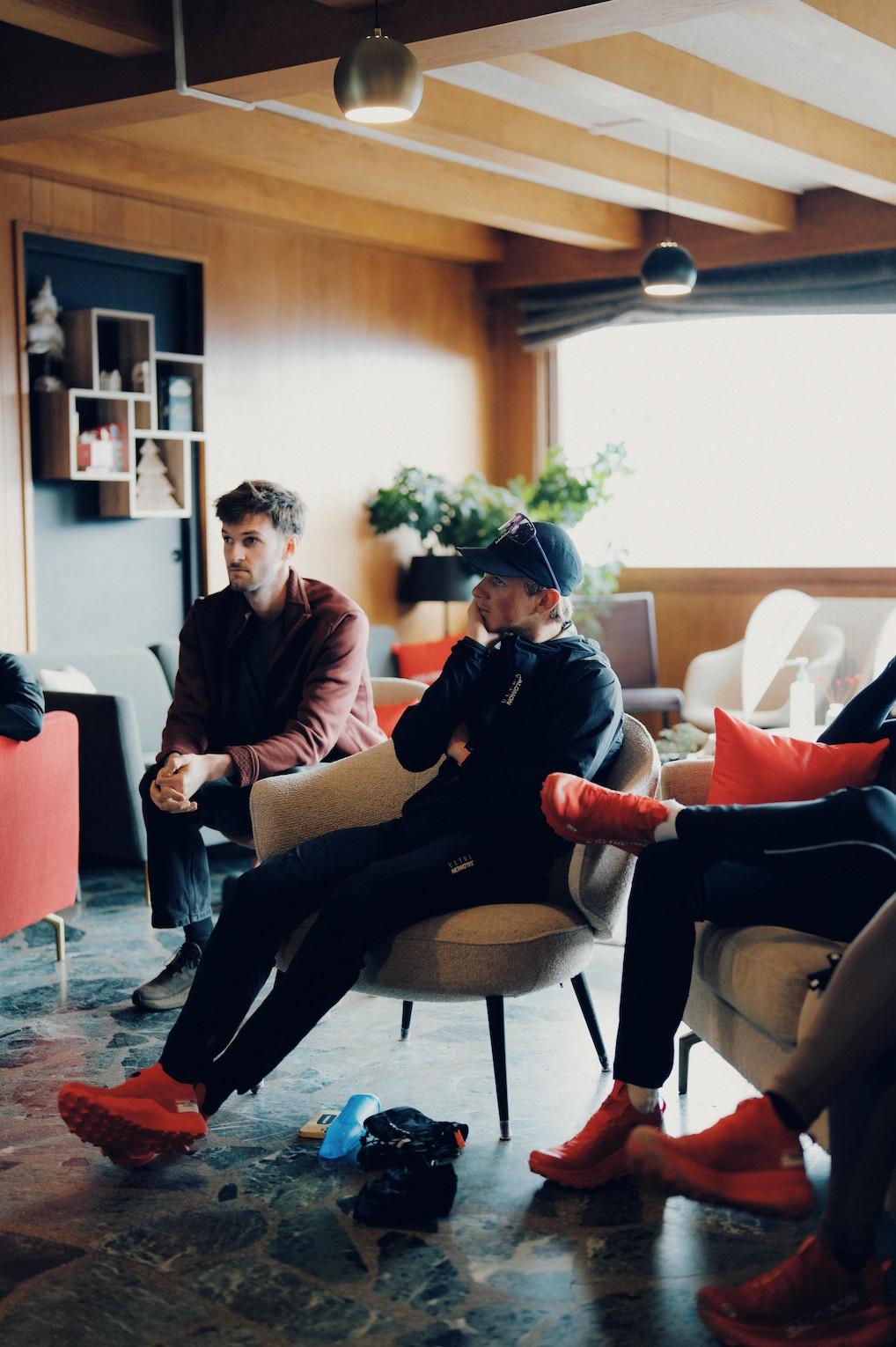


PREPARED TO PERFORM
As the Global Sports Performance Director at Salomon, Aitor Viribay’s job is to design and oversee both the Pro Running and Next Gen teams. He sees the two programmes as connected at a fundamental level. Within a structure that includes both local and global teams, Aitor says that he “sets the cultural direction and the standards for how Salomon thinks about human performance.” And by setting these standards and culture for performance at a global level, Aitor believes they will filter down to the local level.
“We can mould them according to our way of working. It’s not only about developing [young athletes] physically,” Aitor says. “We want to develop them as human beings: from an education point of view, in areas such as health management, standards and behaviours. That’s the approach.”
With his background in cycling, Christian knows why embedding elite athletes’ standards before young runners are introduced to professional level races is important. And this is where athletes like Grayson Murphy, Courtney Dauwalter, François D’Haene, Tove Alexandersson and Rémi Bonnet have such an important part to play. For young runners hoping to make a career as professionals in trail running, having the chance to talk to – or even just observe – experienced, successful athletes will bring huge benefits.
SUPPORTING SUCCESS
With two World Mountain Running Championship wins and five US national Mountain Running Championship victories to her name, Grayson Murphy surely has much to offer young athletes hoping to follow in her footsteps.
And when it comes to the principles of the Next Gen team, Grayson’s route into trail running means she has a valuable point of view. “At college I ran in a Division One programme and I feel that looks a lot like the Next Gen team,” she says. “We had a coach and a strength coach. We had a team nutritionist, a physio, a team doctor. And everything was paid for by the college. So you had all these support people. Then going from college to my first year as a pro, all that support fell away. Within the Pro Running team, Salomon [has hired] support staff which includes nutritionists, doctors, coaches, physiologists, sports psychologists – anything that an athlete could ask for, that will be helpful in trying to reach the highest level of performance and taking care of oneself.”
Rémi Bonnet, another international athlete in the Salomon team, also values the support he receives: “It’s not just being supported by experts, it’s also being able to get custom kit for specific competitions – that’s invaluable. Also, we have pro athletes for every possible distance, and so the advice we can get from our teammates is very varied.”
Tove Alexandersson is a recent addition to the Pro Running team, having competed at an international level in orienteering before switching to the trails. For Tove, the benefits of being part of the Salomon team are numerous: “Everything that the team does from an organisational point of view is really helpful, whether that is at training camps or during races. As an athlete, I am really good at training and pushing myself, but the team is there to help with all the other aspects of being successful.”
Salomon announced the Next Gen team at the end of 2025. Local Salomon teams were invited to propose athletes who might be a good fit for the programme. Of the 30 young runners who applied, 18 were invited to Annecy, the French home of Salomon, for a selection camp. In the end, nine – four female and five male athletes – were invited to join the team.


SHAPING NEW FUTURES
Christian says that as much as the Next Gen team is in its early stages, there are already hugely positive signs. One of the Next Gen athletes has already been picked to join a long-distance training camp being held for the Pro Running team. And younger and older athletes are already starting to integrate.
The sport of trail running has undoubtedly changed in recent years. What Salomon knows is that in order to remain at the head of the pack, teamwork is essential. That investment in creating the ideal support environment for their athletes is going to be a game changer. That is why the outlook for the Pro Running and Next Gen teams is so positive. Just watch this space.
In partnership with

salomon.com