

Lessons Learned
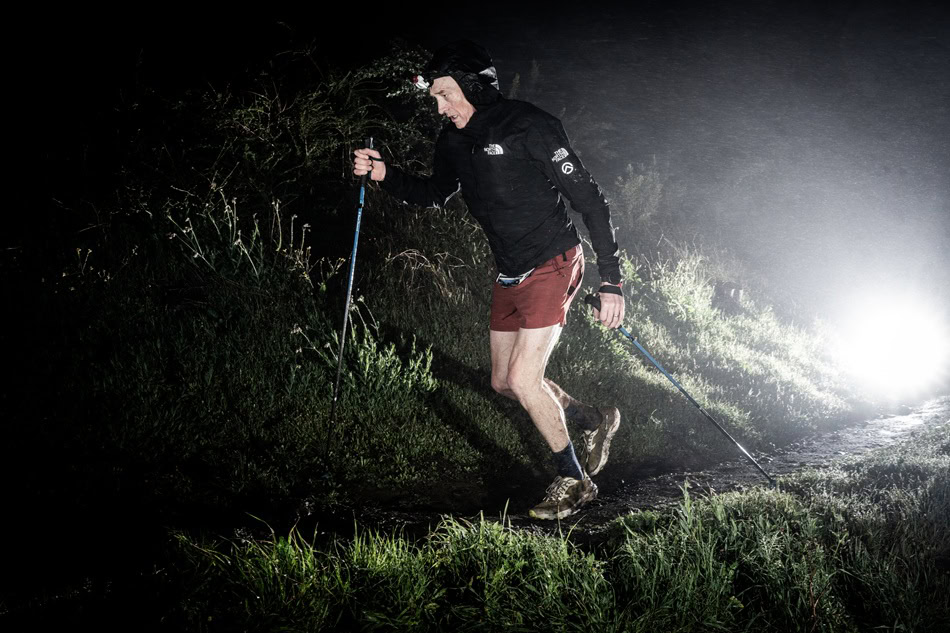
Words By Like The Wind – Photography By Seth Swanson By Ian Corless
Quoting T.S. Eliot might seem an odd choice when trying to explain why an elite trail runner carried a feeling of unfinished business for more than a decade before coming back to redeem himself in the race that had tripped him up so badly early in his career.
But Eliot’s words sum up this important aspect of Seth Swanson’s career rather neatly:
“Only those who will risk going too far can possibly find out how far one can go.”
In a career that has spanned decades of trail running at the highest level, Seth has most definitely risked going too far. Indeed, that is exactly what he did at the Classic 126km Transgrancanaria race in 2016.
The background of that particular race is pretty simple to understand.
Seth raced well in 2015 – his first year as an athlete for The North Face – having finished second at the Western States Endurance Run (WSER) and fourth at the Ultra Trail du Mont Blanc (UTMB). Then 35 years old, Seth had started taking running seriously in 2010 and risen to prominence after some precocious wins and podium finishes. His obvious talent was honed by Seth’s relentless self-imposed training regime. But back then, Seth did not have the support of a coach – the absence of which was likely a factor in what was to come.
As 2015 came to a close, Seth was frustrated. He felt – in fact, he knew – that he could do better than back-to-back second place finishes at WSER (in 2014 he finished just 22 minutes behind Rob Krar and in 2015 a repeat result, following Krar home once more). And at the 2015 UTMB, being edged into fourth place (behind the winner, Xavier Thévenard, Luis Alberto Hernando in second and fellow American David Laney in third) gnawed away at Seth’s ego.
So, coming into the 2016 season, Seth knew what he had to do – train harder than ever and be in the best possible shape to race himself into contention at Transgrancanaria, then Western States and finally the UTMB.
Except there was a problem.
“I had just joined The North Face in 2015 and I felt that maybe I had a bit to prove,” Seth says. “Not just to the team, but also to myself. I was just really eager and I was probably taking too big of a bite for what I could manage.”
Seth sees now that he wasn’t “taking into account the other stressors of life.” He had a young family – in 2015, Seth’s children were three and five years old. Then there was full-time job. As Seth says, he was “burning the candle at both ends”. He also sees now that “maybe there was a bit of a chip on [his] shoulder after 2015.”
Seth decided that he was going to give everything he had to not only winning prestigious races such as Transgrancanaria, WSER and UTMB, but through topping these podiums, taking victory in the year-old Ultra Trail World Tour competition, in which these target races were all involved.
This was a huge target, no doubt. But Seth was sure that if only he could train more and more intensely, he would be able to make these dreams a reality. “And so I went to the 2016 Transgrancanaria race,” Seth recalls. “And I just showed up completely exhausted. I didn’t sleep a wink when I got to the island, probably because my body was just in repair mode every time my head hit the pillow. My heart was racing.”
The starting gun was fired at 11pm and the runners started fast, thanks to a flat first few kilometres. But Seth knew something was wrong. “I noticed immediately that I felt off,” he says. “Of course, the start line adrenaline only takes you so far. And then the reality of a long, super hard race kicks in.” Seth says that pretty quickly his body was “working a lot harder than it should have been for what I was doing out on the trails.” And that he even started to feel “feverish”.
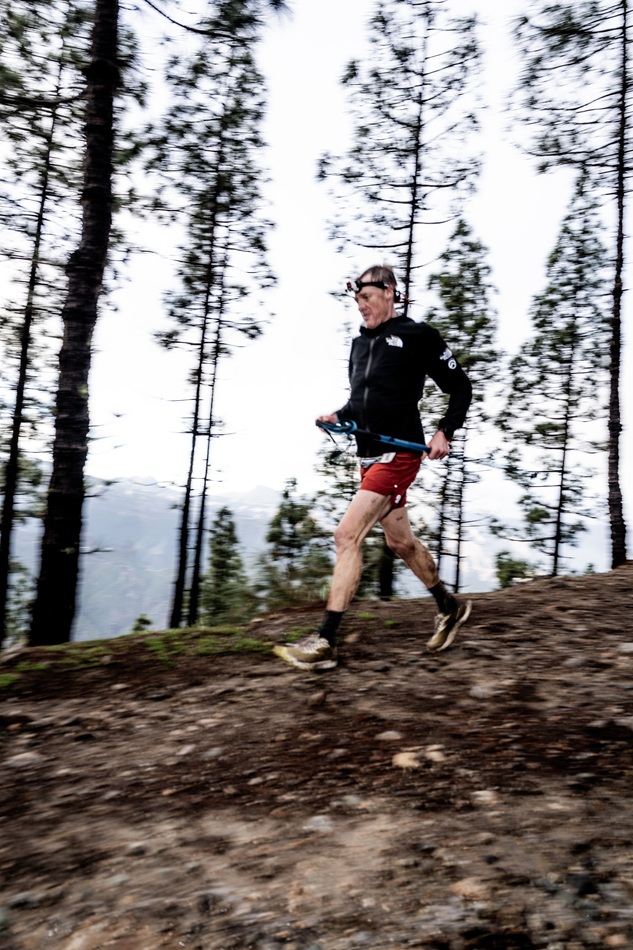
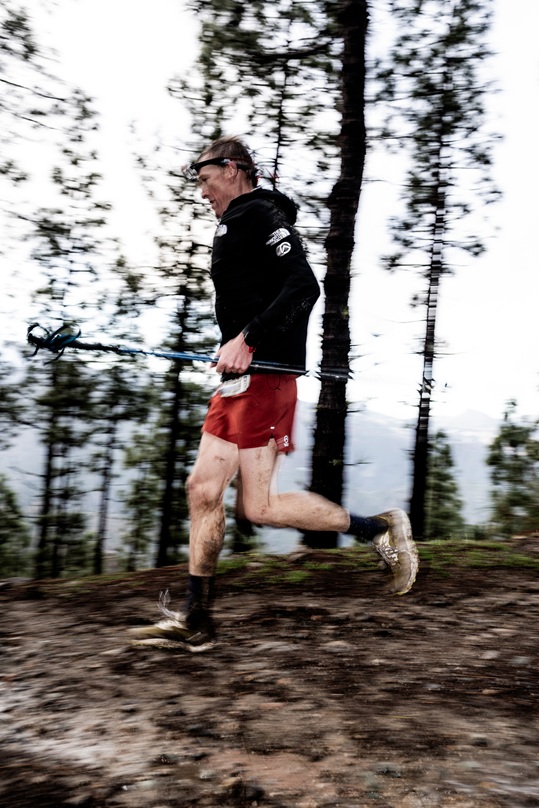
By the time Seth was approaching the marathon distance, his race was coming to an end: “I got to about the 50k mark. And when I got there, all I wanted to do was just lay down. Just sleep.” Seth’s attempt at the Transgrancanaria race – the one that was supposed to kick off his world-beating season – was over. It was time to regroup. Work out what went wrong. Make some changes. Or perhaps not.
“I still didn’t listen to my body after that experience,” Seth says. “I pulled out of the race. It was my first DNF. Which was not the end of the world. But it had involved a lot of sacrifice – time away from my family when I had really young kids. Feeling lousy at work. And I just felt like, ‘Man, what did I do this for?’ So I got right back into the same rhythm.” Seth returned to training harder than ever. With the opportunity to race at WSER and UTMB still available, he thought that the answer was to go harder. The records show that in 2016, Seth did not start either WSER or UTMB.
Talking to Seth Swanson today, there seems to be a softening. Not that his competitive spirit is missing – far from it. But perhaps there is some wisdom gleaned over the last decade. “I think that now the biggest thing for me is not so much my position in a race,” Seth says. “Of course, it is always kind of lingering back there – the ego is too big not to think about that. But now it’s all about seeing how efficiently I can move through these challenging terrains.” While Seth says that he’s not purely driven by position any more, he still finished the 2026 Transgrancanaria Classic race in 16th place – surrounded by athletes 10 or even 20 years younger than him.
So what has made the difference? Seth says that he trains in a way that is more sustainable now, taking into consideration his lifestyle and the demands that put on him. Also, Seth acknowledges that advances in footwear, apparel and kit have all made a difference: “There’s been years of evolution in the quality of footwear from The North Face. And that has honestly been a really big thing. And our outerwear, that fits perfectly on the vests we wear. I’m fortunate to spend all my time in what fits me best. It’s what I know, what I’m comfortable in and that’s what I race in.”
With a successful return to the race he failed to finish in 2016, Seth says that now he has his sights set on new challenges. Longer races, in fact. In 2024, Seth finished the 330km Tor des Géants. And for 2026, he has his sights set on the nearly-400km SwissPeaks “Legend” race.
And with the longer races, there is even more learnings on which Seth can draw. “The most important thing, I think, that I have learned, is that you really just need to have the discipline to listen to feedback from your body. To be introspective. To have the discipline to react to that feedback and be honest with yourself. To know when it’s time to say no and when it’s time to take your foot off the gas.”
Or when it’s time to give it your best shot.
That is the game – getting the balance right. And in finishing Transgrancanaria, Seth showed that he can get the balance right. And that the future can be very exciting.
All thanks to the lessons learned the hard way.
In Partnership with

thenorthface.com