

Raising the Bar
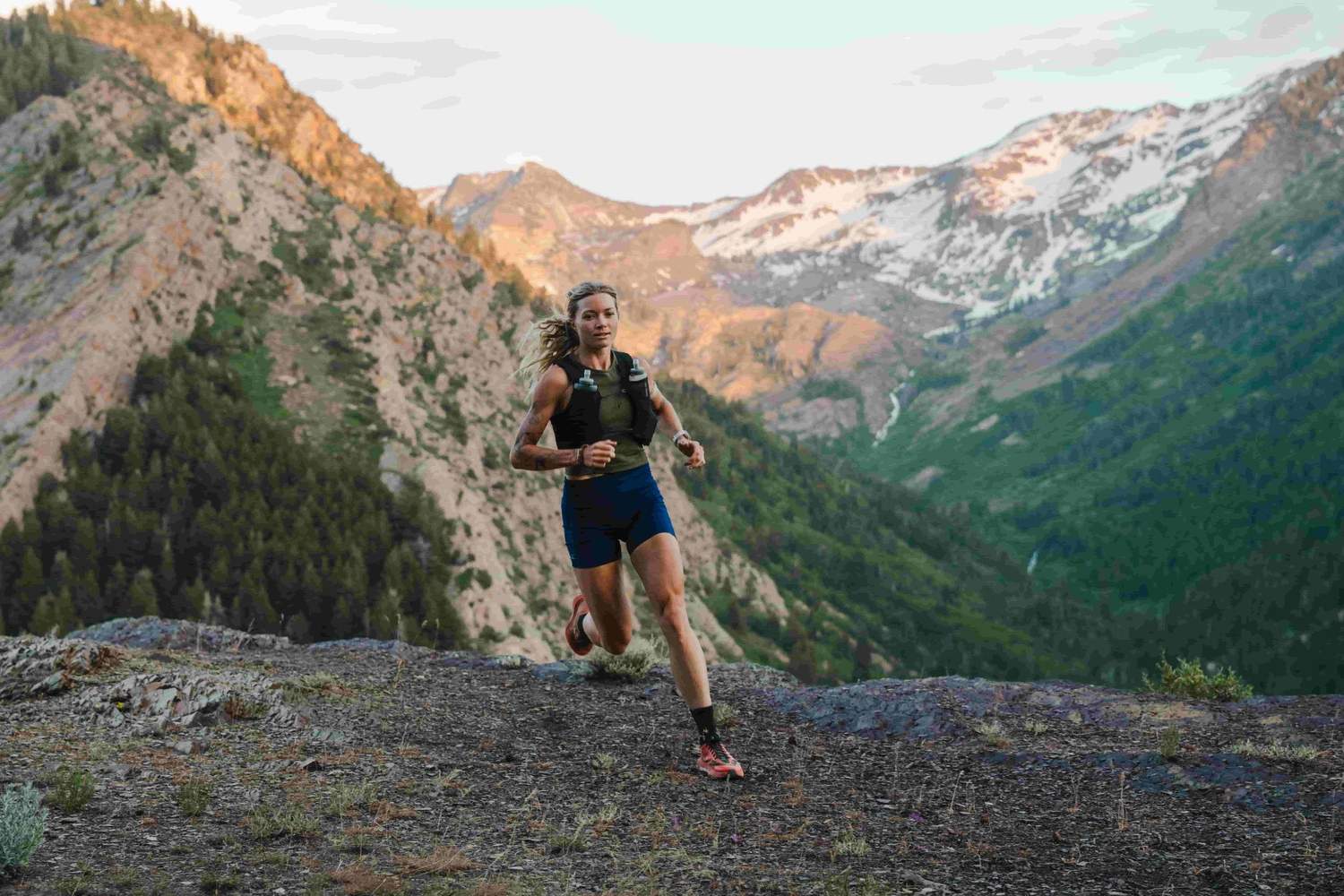
Words by Like the Wind – Photography by Connor Burkesmith
In August 2025, Jazmine Lowther set both the supported and unsupported Fastest Known Time (FKT) for women on the Grand Teton — the tallest peak in the Teton Range of Wyoming, which towers at 13,776 feet. Supported, she ran the route in 3h51m12s. Then, one week later (and just hours before a 12pm flight out of Jackson, Wyoming), she set the unsupported record in 4h6m58s.
This was the first FKT attempt by a woman on the modern Grand Teton route, as the former route had been eliminated due to controversy sparked by a runner using a closed (yet well-known) trail during a FKT attempt. Jazmine had encountered the peak three times in the summer of 2024, when her attempts at climbing the peak were all about fun, adventure and curiosity, but setting an FKT still was nerve-wracking: despite her decade of climbing experience and being an elite trail runner, the fear of making a mistake during one of the exposed, technical sections was palpable.
Regardless, Jazmine crushed her attempt. When she felt fully recovered one week later, she decided to go for the unsupported record… just for fun.
Shortly after Jazmine’s FKT attempts, Jane Maus overtook her record by less than five minutes. But that was okay for Jazmine: she knew Jane had also been gunning for the record, and she views FKTs as inherently temporary. She wants to see more women attempting technical FKTs, and Jane raising the bar fits that goal — even if it might sting personally. Plus, Jazmine’s not finished on the Grand: she knows that her attempts were imperfect, and she’s curious about what another attempt might look like down the road.
Through her FKT trials on the Grand Teton, Jazmine says that she learned many valuable lessons — knowledge that she wrote down to help other people who might be in pursuit of an FKT of their own. We spoke with her about these lessons and about her experience on the Grand — learnings that Jazmine will no doubt take with her during her next FKT attempt.
Like the Wind: What did your Grand Teton FKT attempts teach you about yourself and the mountain?
Jazmine Lowther: It’s allowed me to grow as an athlete and to gain trust in myself and in that mountain. The sheer amount of empowerment that you can gain from that is pretty massive. I navigated the sections. I felt totally calm. Like the traversing of exposed sections went safely. It was like, “Oh my God, the impossible is now possible.” Just trusting in the process, you can make the impossible possible.
LtW: What did you learn from the unsupported effort that you didn’t get from the supported one?
JL: There was more peacefulness and hearing my own inner voice more clearly. It was very different when I was there with someone else — it’s kind of this weird mentality that makes you recognize your suffering a little bit more. I think I soldier on a little bit more easily when I’m solo, and the enjoyment was more there. For the unsupported attempt, I think my ego just needed to do it for fun and get to enjoy the mountain by myself.
LtW: What does “getting messy” mean to you in a high-performance environment?
JL: Trying something that might not be fully attuned to your skills. So for me, I am definitely more of an endurance athlete — going under a six-hour effort is kind of short for me, so doing something of that distance definitely is a little bit out of my niche. And scrambling is a hobby that I pursue actively, but doing that in a kind of race, it definitely puts me out of my comfort zone. I have had friends who have died scrambling, and it puts fear into me at the ultimate core. It’s like, how do we do these pursuits responsibly? So it’s okay to get messy, but we have to ask ourselves honestly, “Do I have the skills that meet this project and can I do it responsibly?”
LtW: Why did you want to write about this experience and share your learnings?
JL: I hope that anyone who’s going to do it will do it right and turn over every stone. I think that will set them up for success and for minimizing risk. I think the victory is usually just within yourself when you’re doing an FKT. At least in my instance, it was like, would I be able to go sub-four hours? And I think that needed to be my foundational goal, just being happy with that. Writing made me feel a bit more at peace with it all.
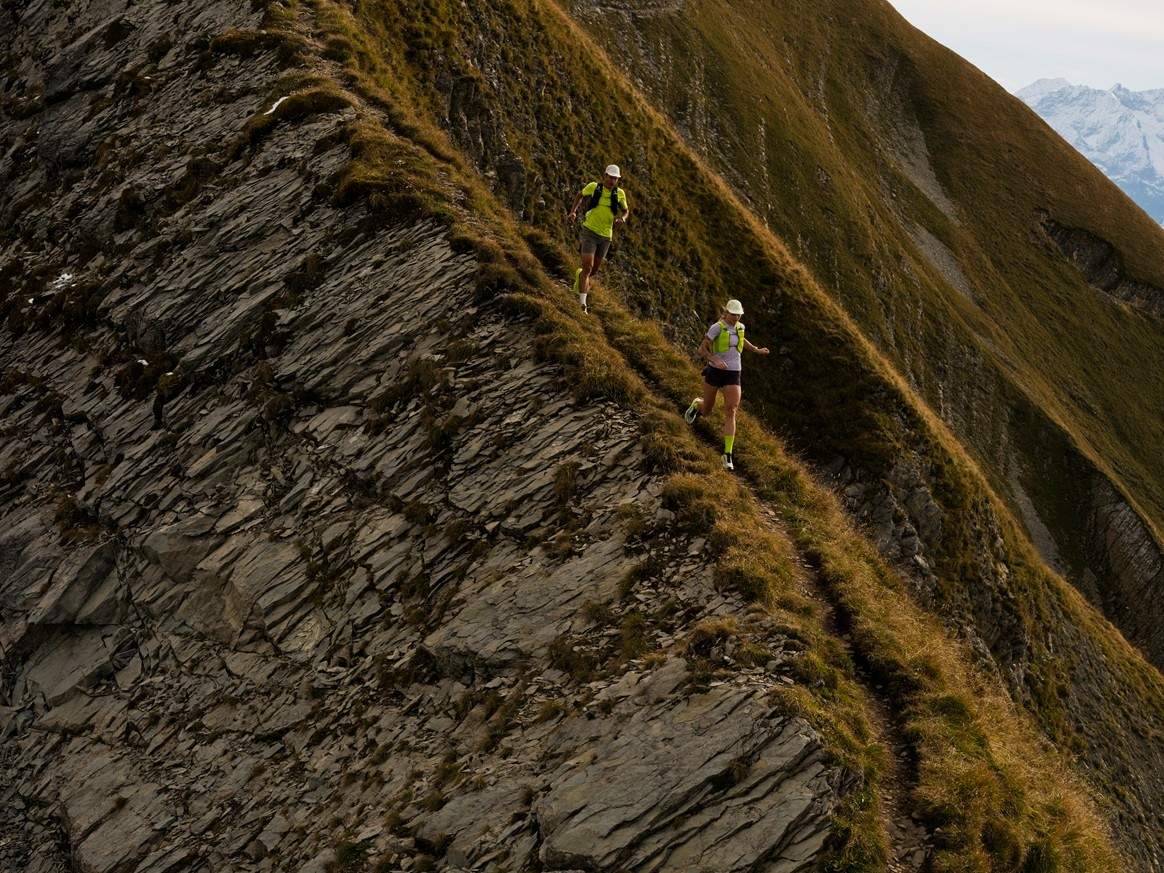
How to Set a Grand Teton FKT
Words by Jazmine Lowther — photography by Hardergrat Blanchard
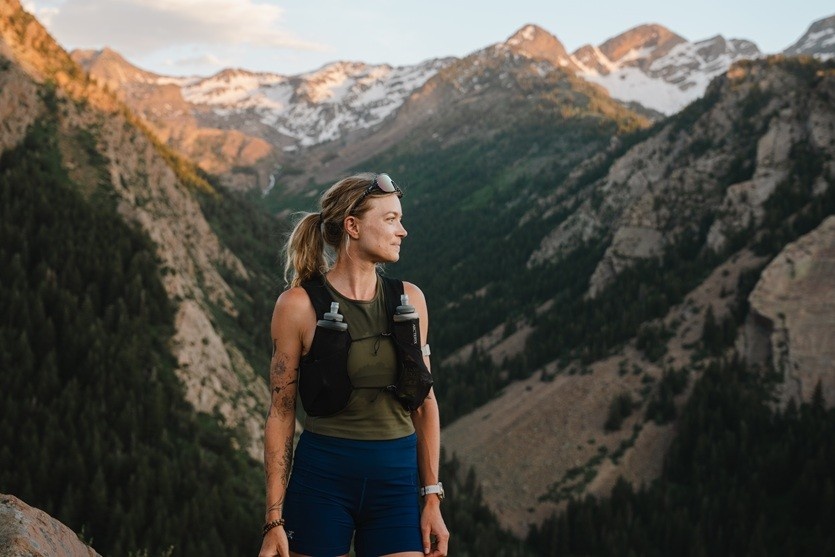
Get To Know The Route
The Grand Teton combines diverse terrain into one formidable objective. You’ll encounter runnable, flowy trails, rocky paths, boulder hopping, fixed ropes, and scrambling. Take opportunities to refill your water from streams and soak your hat if it’s hot. As you ascend to rocky moraines, choose your preferred route. Agility and finesse are essential for smooth movement. Use landmarks to remind yourself to turn or to time your splits (look for signs, large boulders, etc.). As you move past the moraine, you’ll see a large wall with the fixed line to your right. Scramble up the rock wall — using the rope if you need to — and push your aching quads up to the col. The lower saddle is semi-runnable, where you’ll find the black rock to your right. Navigate the gullies and technical terrain with some scrambling and climbing moves (5.4–5.5). Gain the upper saddle by moving through the belly roll, catwalk, or whatever route you prefer. When you reach the top, give the summit block a slap, take in the view, and start your descent.
Connect Deeply With The Mountain
For any FKT attempt of six hours or less, every minute counts. Knowing every rock, turn, split, technical feature, climbing move, and route variation will help you flow smoothly through technical terrain. Go up the mountain with others — friends, locals, or previous FKT holders — and learn from them. But also aim to go solo, if it is safe to do so, and experience it by yourself — it helps you learn the route, memorize the turns actively and enter a flow state more easily. Remember that we’re not here just to conquer mountains, but rather to connect with them. I see mountain running as a dance with the terrain, moving in harmony with it.
Consider Workouts And Route Variations
If you’re not having time to practice time trialing, as it’s an invaluable experience. Break the route into sections and time yourself for each part during a tempo-threshold workout. This allows you to navigate the terrain quickly and identify areas where you can shave off seconds; even small adjustments add up. Explore different route variations as beta information, since what works for some athletes may not work for you.
Nutrition For FKTs Often Requires Sacrifices
If you choose to refill your water on the col, it will add time to your attempt. Carrying excess weight will slow you down, especially at higher altitudes. I opted to carry one 500 mL flask with a drink mix and a few gels (one containing caffeine). I planned to stop at least twice to refill my water. Ideally, I would have consumed four flasks and 100 grams of carbs per hour, but I did not. This raises a question worth exploring: should you aim for ideal nutrition and risk carrying extra weight, or go lightweight and intentionally deprive yourself?
Layer On Adaptations For Altitude And Heat
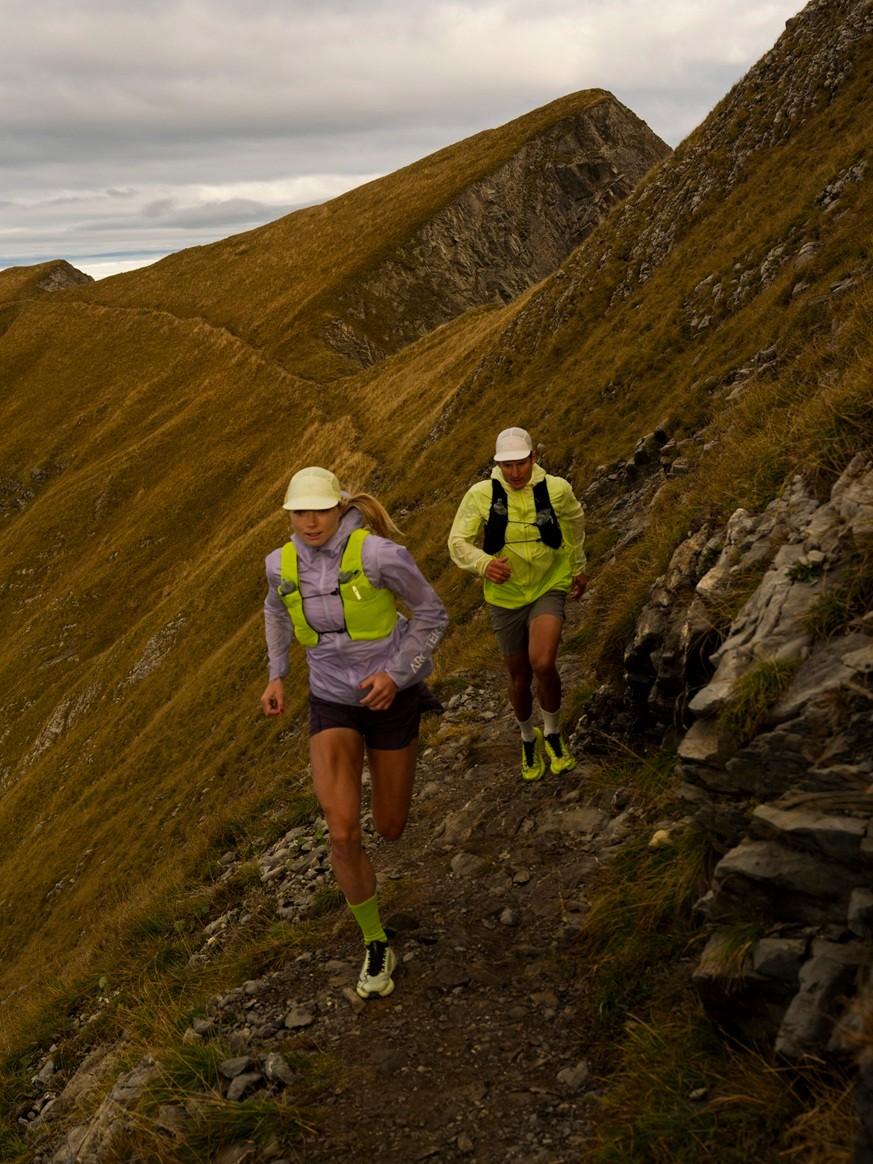
Adaptations to altitude and heat are icing on the cake. If you can, sleep high and train low, or occasionally train at higher elevations; this helps prepare your body for altitudes above 12,000 feet, especially if you’re coming from a lower elevation. It usually takes a few weeks at high altitude for your body to produce more red blood cells and adapt to the lower oxygen environments. Be sure to refuel yourself with more carbohydrates and protein and increase your iron intake. Additionally, you can incorporate heat training: aim for at least nine sessions over two weeks before your attempt, with each session lasting 20 minutes or more in a sauna, steam room or hot bath to raise your body temperature.
Go For It, If You Want To.
At the end of the day, I’m grateful to have contributed to the creation of the “Modern Route” at Grand Teton. The entire experience was both humbling and empowering. FKTs are reaching a new horizon, with increased scrutiny, competition, and recognition. Trying a new route can be daunting at first, but it’s incredibly rewarding to discover what you’re capable of when you learn to move with the mountain. I would love to see more women attempt the Grand Teton FKT; it has only just begun, and this sport is progressing forward, expanding our thoughts on what’s possible.
In Partnership with

arcteryx.com