
Movement is Art

Movement is Art


Estimated reading time: 13 minutes
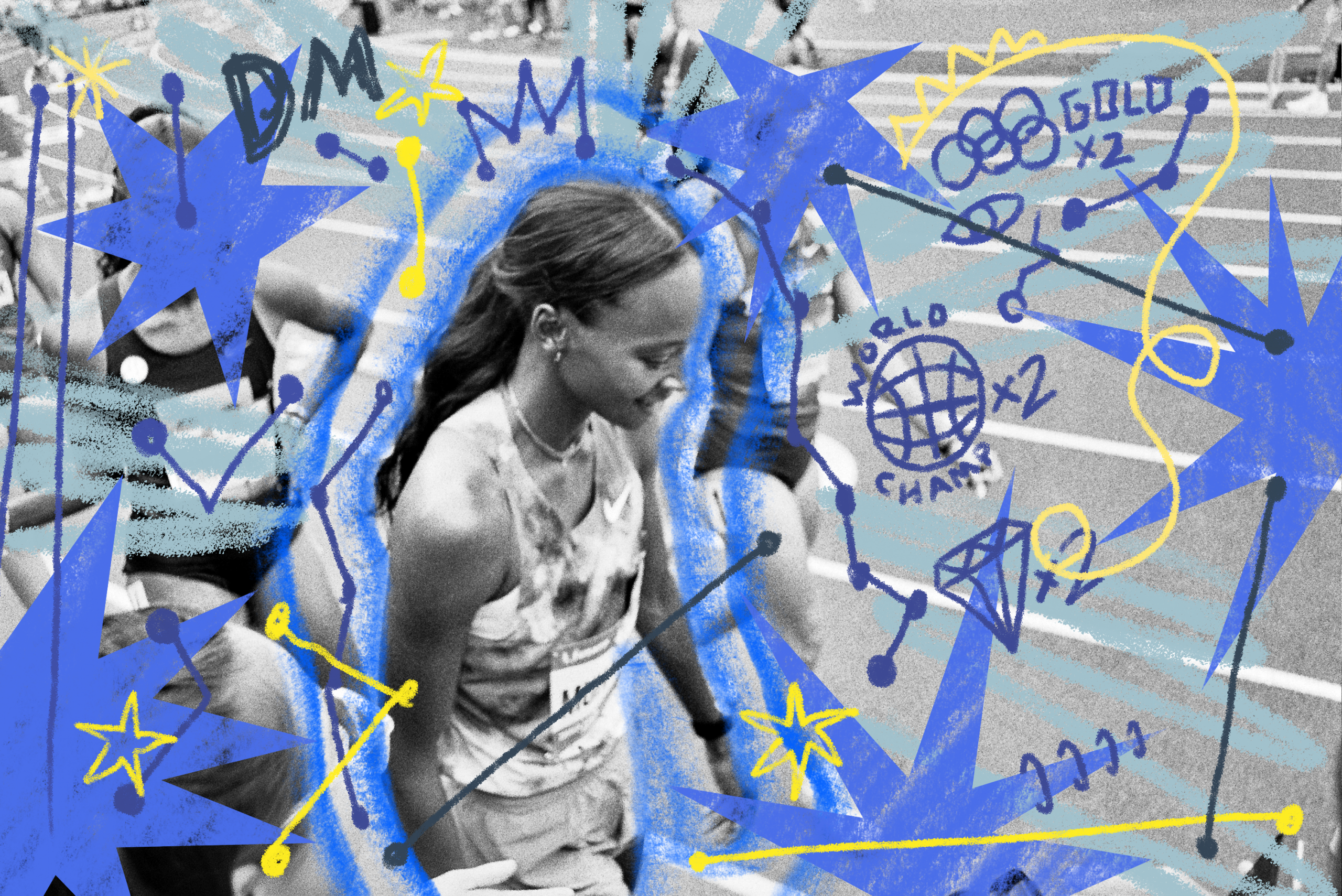
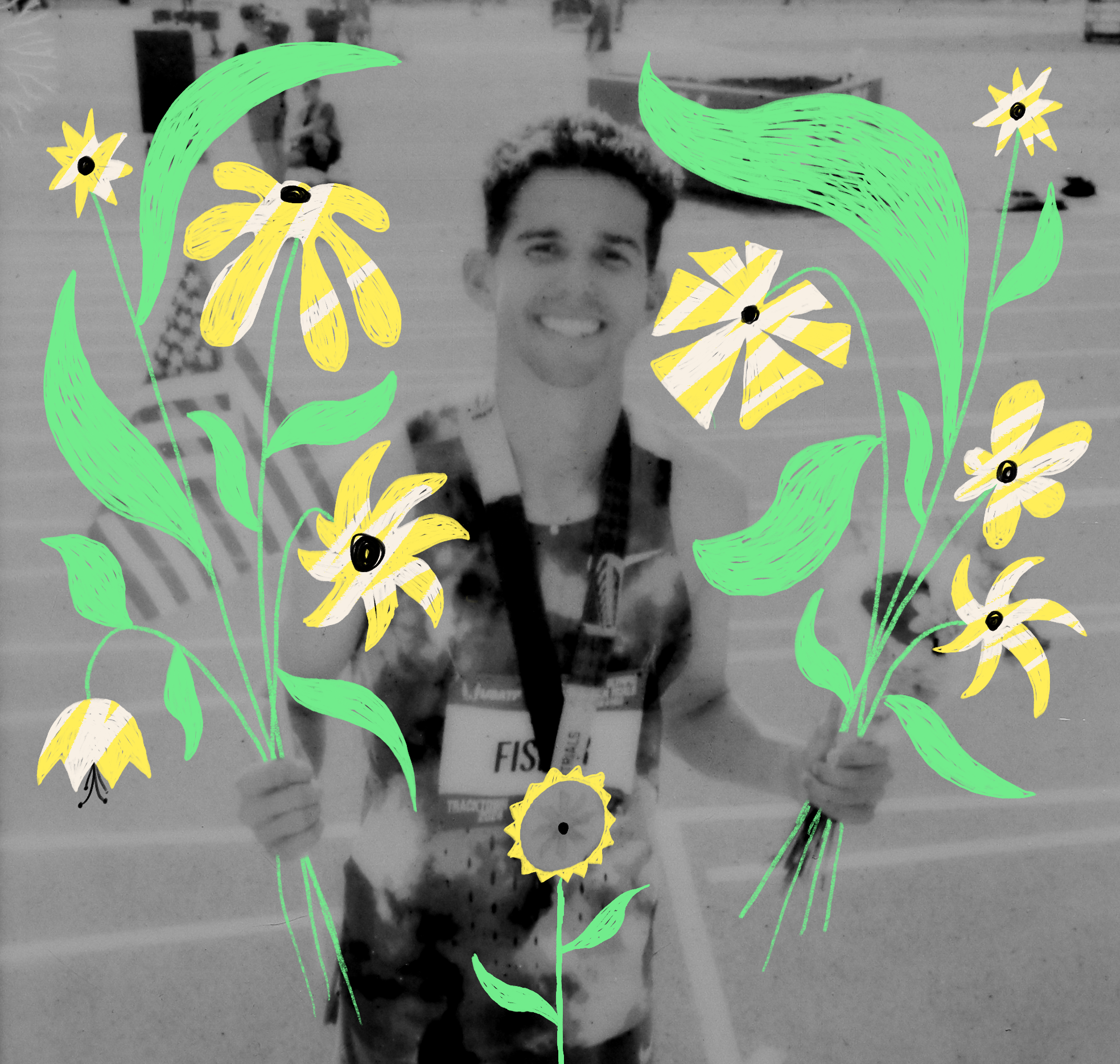
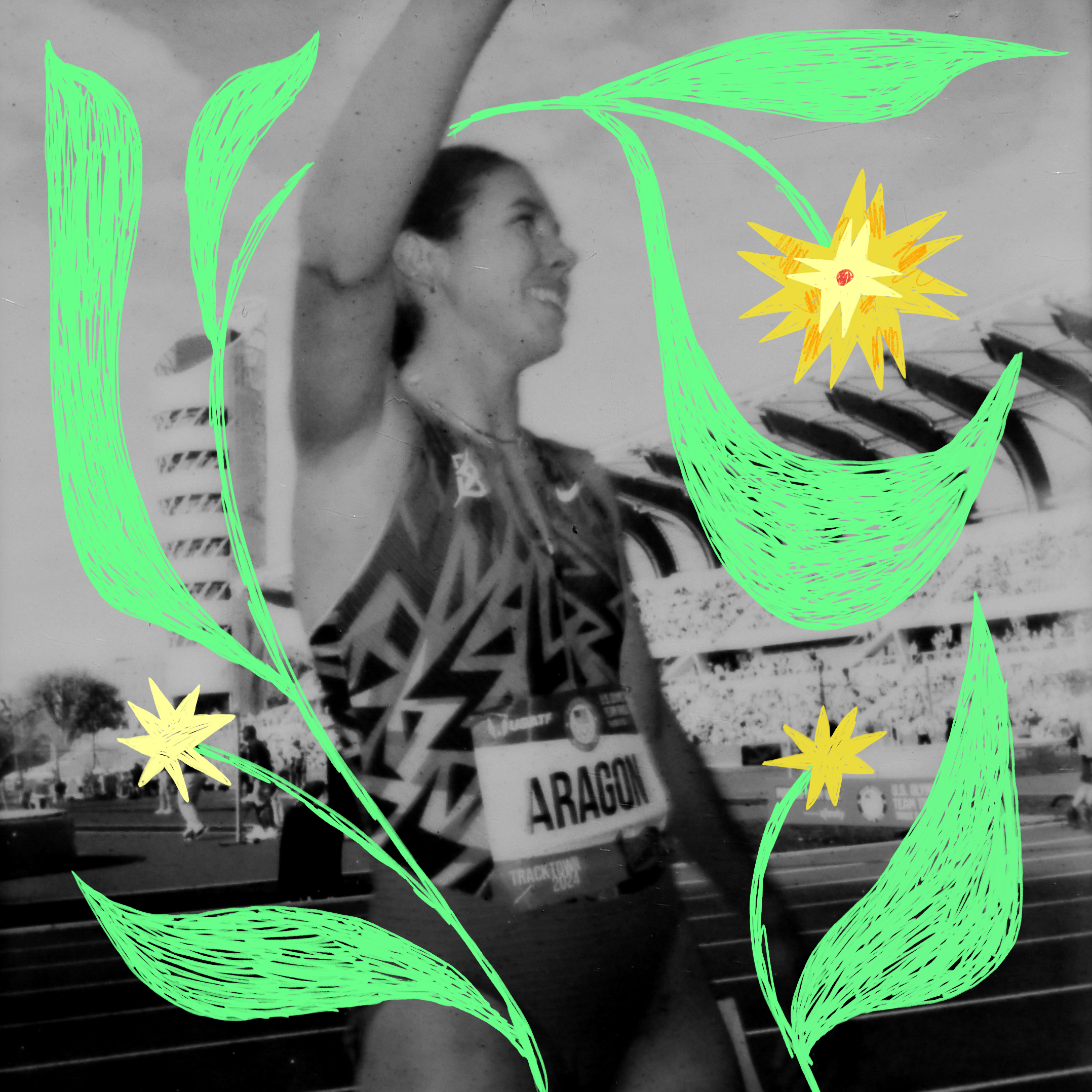
Zach Litoff is both an artist and a runner. It’s this duality that gives him a unique understanding: how motion is inherently creative. Through his work, Litoff’s main mission is to show that movement in and of itself – specifically running – is art. As a former competitive track and field athlete, Litoff has seen the changes and growth in the sport firsthand. These changes are what gave him the idea to take film photography at the 2024 US Olympic Trials in Eugene, Oregon – and turn those images into art.
His goal was to capture the professional track and field atmosphere during this time of change, as well as the humanity of the athletes who competed – an aspect of the sport that is unchangeable. Litoff assembled his work into a book called The Last Olympic Trials, which is made up of 100 multimedia drawings over film, 20 film shots, 50 polaroids painted over, 10 paintings done live while in the stands – and more. He talked to Like the Wind about his running career, creative process and the dozens of stories that inspired the artwork in his book.


Your recent project The Last Olympic Trials is the culmination of a love of art and a love for track and field – but which came first?
Technically, art came first. I’ve loved art since I was a toddler. But the love of track became part of my identity before art did.
So would you call yourself an artist or a runner? Or both?
This is an identity crisis I battle with every day. Each passing day I’m more of an artist than the day before, so I’m trending that way. The Olympic Trials was the point in which I became more artist than runner. But I will always be both.
What’s your history with running and in particular track and field?
I’ve been running since I was a little kid. My parents both ran: my dad professionally, for a minute, and my mom just competitively. My sister and I ran in college. I ran at Santa Clara University and was an All-American steeplechaser, almost qualifying for the US champs. Running has given me the life I have. I would not have gone to a good college without it, I would not have the art business that I have without it. Running has taught me basically everything I know.
“Running has taught me basically everything I know.”
What led you to produce The Last Olympic Trials?
I feel like there are so many stories that aren’t being told at big track meets. It’s usually just photographers crowding the finish line, telling the story of whoever is the best runner. But to me, what makes track special is everything. So I wanted to focus on the sport as a whole. I feel that, with my full stack understanding of the sport, I had a perspective no one else had. And a lot of that perspective was showing me that the sport is changing rapidly. I don’t think it will ever be the same. And I don’t think that’s bad. But I don’t think anyone is talking about it. Or, if they are, it’s met with, “Well now running is more accessible” or “Now athletes get paid more”. Which is true, but also what it used to be was special in certain ways too. It was such a small community. I wanted to try to tell the story of that.
MOVEMENT IS ART
Can you tell us about your creative process?
I’m going to pull a quote from one of my favorite musicians, Tyler the Creator: “Create like a child and edit like a scientist.” I try to do as much as I can with no worries about how it’s going to turn out or what it is or anything. Then, when it’s all done, I look at it and think: what I can do with this? How can I edit this into being a story that’s worth telling? I use a lot of physical mediums like painting and drawing and film photography, combined with digital methods like Procreate, Adobe Fresca, Photoshop, Illustrator and Lightroom. For the photos in this book, I just took as many good film photos as I could and then drew over them once I was home in San Francisco. During the drawing time, I tried to just think about what story was worth telling and used that photo as a starting point. Most photos had about, one to five drawing options over it. Create like a child, edit like scientist. Then I would pick the best one.


There’s a lot of movement and energy in your work. How do you think your work is influenced by being a runner?
Running taught me how to work. How to be dedicated to something day in, day out, with slow progress. I’ve learnt how to create because of the skills that running taught me. Also, running gave me the experience of being a runner. Of competing at that high level. Of knowing everyone’s watching. It gave me the experience of crossing the finish line in first. It gave me a taste of the devastation that comes after failing at your goals. Running gave me all the emotions and all the stories that were unfolding at the track over those 10 days. I commonly say running is the medium and I just use photography, film, painting, drawing – whatever – to tell that story.



Do you draw parallels in your creative projects to training and racing; the research, planning, travel, analogue forms like Polaroid that only give you one go at capturing something? It seems familiar, like building up to a race?
Yes. Running taught me how to care. Running taught me how to learn. Running taught me how to live. I approach my work now similarly to how I approached training. I’m a very Type B person, so I don’t overly plan everything. But in similar ways to a race, I don’t show up unprepared. You’ve done the training, but once the gun goes off it’s random. You never know what’s going to happen. I show up to track meets or events now with every medium I can fit in my backpack. I’m prepared for anything, but I have almost no expectations.


What was your favourite moment of the Last Olympic Trials project?
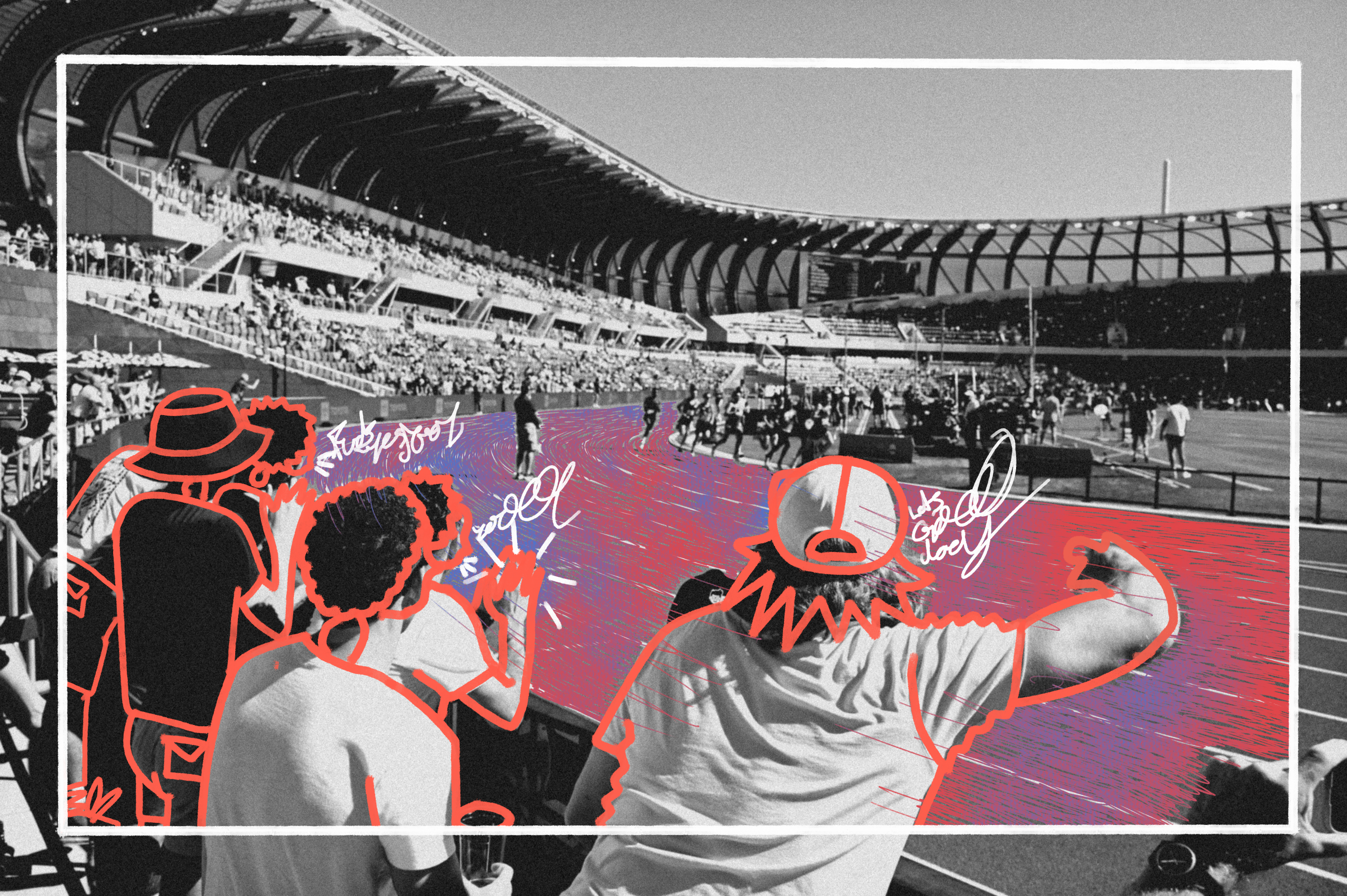
Cheering for my college teammate Joey Berriatua. He was my mentor in college and the whole stands were chanting his name. That or walking into the stadium for the first time: I always thought I would be at the US Trials to compete, not to make art. And in the moment I was really, really sad walking into the stadium. I was alone and kind of felt like a failure. I didn’t know what I was doing. But, looking back on it now, that was a really special moment. It’s like the moment in the movie where it’s dumping rain.
How much did you get to interact with the athletes in the making of this project?
A fair amount. More than some photographers because I’m friends with some of them. But it’s really weird because I hate the paparazzi vibe. I’m not trying to just take a picture and dip. So it’s always weird taking pictures when they’re busy with pro running. A big thing I focused on was that the athletes are only part of the story at these meets. The other creatives, the event staff, the fans are all part of the story too.
LIKE THE WIND IT’S WHY WE RUN
want more stories like this?
Subscribe to Like the Wind and receive global running stories in our quarterly magazine
What do you hope people learn from your work?
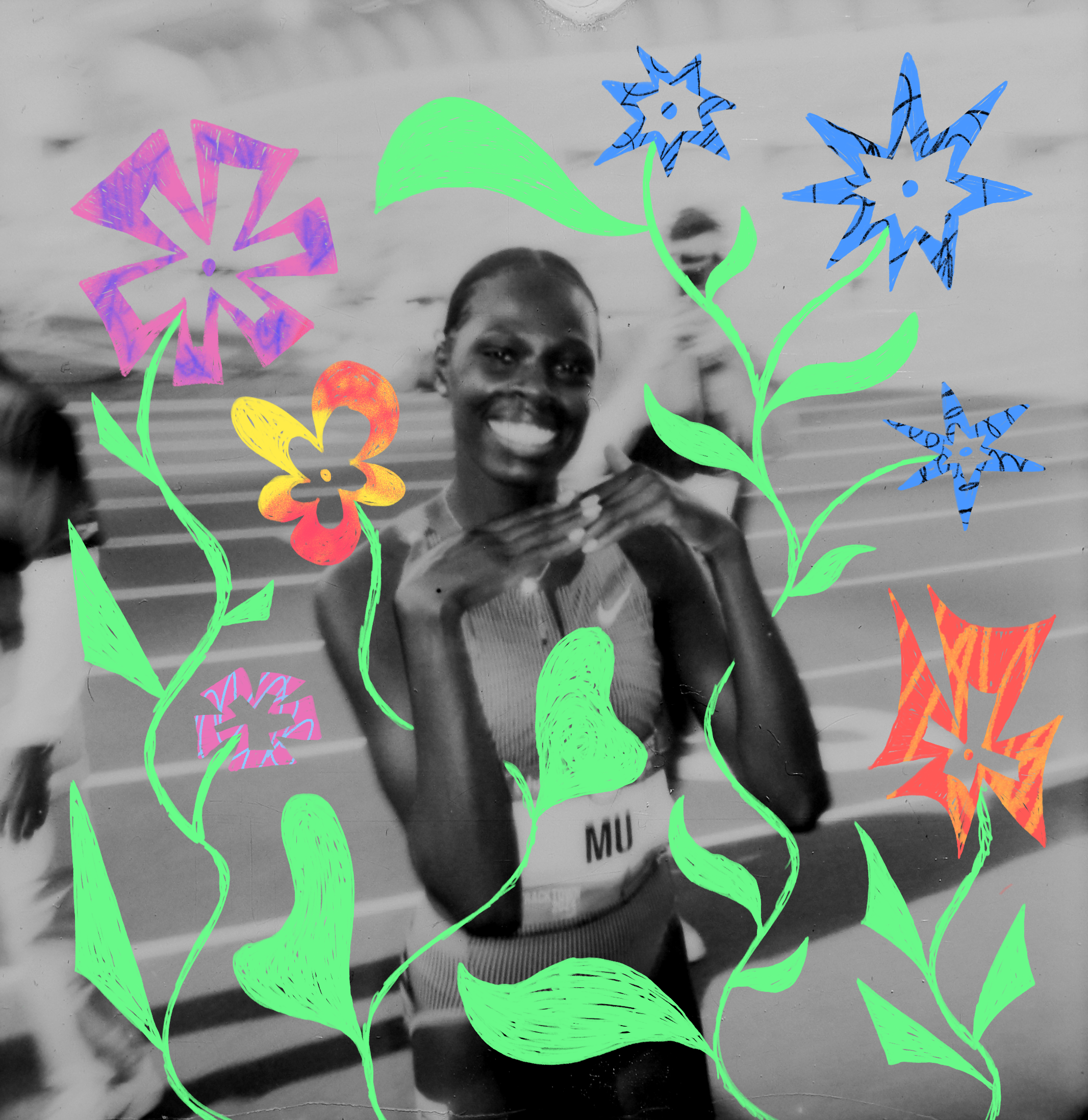
Honestly, I think my book will age really well. I think a lot of the stories and messages are about the changing sport and the changing world. And it’s still in that same changing motion as we speak. But in a few years – the 2028 Olympics – I think it will all be very clear. In the flowers section – I hope people realise that everyone is special. Not just famous people. We’re all humans. We’re all unique. We’re all amazing. Everyone deserves that recognition for no reason other than they’re themselves.
Why do you run?
I’ve run for many reasons in my life, my relationship with running is always evolving. But running leads to good things. I don’t always know where I’m running to, but it’s always taken me to the destination I need to be at. So, I kind of run out of blind trust that it’s what I’m supposed to be doing.
Alex Murphy is the Creative director of Like the Wind magazine.
Zach Litoff is an artist based in San Francisco, USA, who explores identity, movement and sport through painting, film photography and storytelling.