
The Space Between – How Gravel Running Is Rewriting The Rules

Words by Like the Wind – Photography supplied by Salomon
There’s a turn you’ve probably taken without thinking about it. Away from the pavement, onto something looser – a forest path, a canal towpath, a dirt road that curls off behind the park. You didn’t plan it. You just followed it. And maybe, for a few minutes, running felt less like exercise and more like something else entirely: escape, curiosity, a small private adventure.
Salomon has not only named this space – it has built an entire movement around it. Gravel is the French brand’s boldest cultural bet in years: a discipline, a philosophy and a new way of thinking about what running is for.
Gravel running occupies what Salomon describes as the middle ground between the concrete jungle of road running and the vertical, gear-intensive world of mountain trails. It is a hybrid experience – road meets dirt, city meets nature. For years, urban runners have been naturally swapping the extremes of hard asphalt and overly technical terrain for the smoother, nature-adjacent routes that gravel provides. And transitioning to a gravel-specific shoe is like putting bigger tyres on a road bike: it gives runners the stability and confidence to leave the pavement while keeping a familiar rhythm underfoot. It feels intuitive from the first step – explorative without being intimidating, adventurous without being extreme.
From Cycling To Running – The Word That Changed Everything
In cycling, the gravel revolution didn’t happen because someone invented a new kind of bike. It happened because a particular kind of rider got tired of being told which roads they were allowed to be on. Gravel cycling emerged as the sport of no fixed rules.
Christian Meier knows this story from the inside. The founder of Overland Running Provisions – a trail running shop and community hub – and ex-professional cyclist himself, he was among the first wave of athletes to settle in Girona, a sleepy Catalan town that quietly became one of the world’s great cycling destinations. He witnessed gravel cycling emerging. “It developed this culture of freedom,” Christian explains. “You could go wherever the day led you. It really sort of dropped the clock.”
That phrase – “dropped the clock” – is the key to understanding why Salomon believes the same shift is happening in running. Because for all the advances in GPS data and race-day optimisation, there’s a growing community of runners for whom numbers are, sometimes, beside the point. Gravel running offers what Christian calls an “adventure mindset” – you simply start out and see where the run takes you.
Lydia Keating, NYC-based writer and content creator, knows that feeling. Her weekend runs trace a long arc from Prospect Park to Central Park: a route that mixes pavement, bridges and gravel paths in a continuous movement through the city. For Lydia, the switch from tarmac to gravel is not a technical choice but an emotional one. “When I find myself obsessively checking my watch on the pavement, I step onto the gravel and it immediately reminds me: this is supposed to be fun. Gravel taps me back into the joy of running.” The watch, she says, becomes beside the point. The run becomes the point again.
The word matters, too. When Salomon’s product team first began thinking about the space between road and trail, they chose their language deliberately. “We called it gravel on purpose,” says Gatien Airiau, Salomon’s Product Line Manager for running footwear. “Our ambition was really to stamp it – Gravel Running – for the whole industry and lead the path for other brands on this new segment.”
The Blank Page: Designing For A Feeling
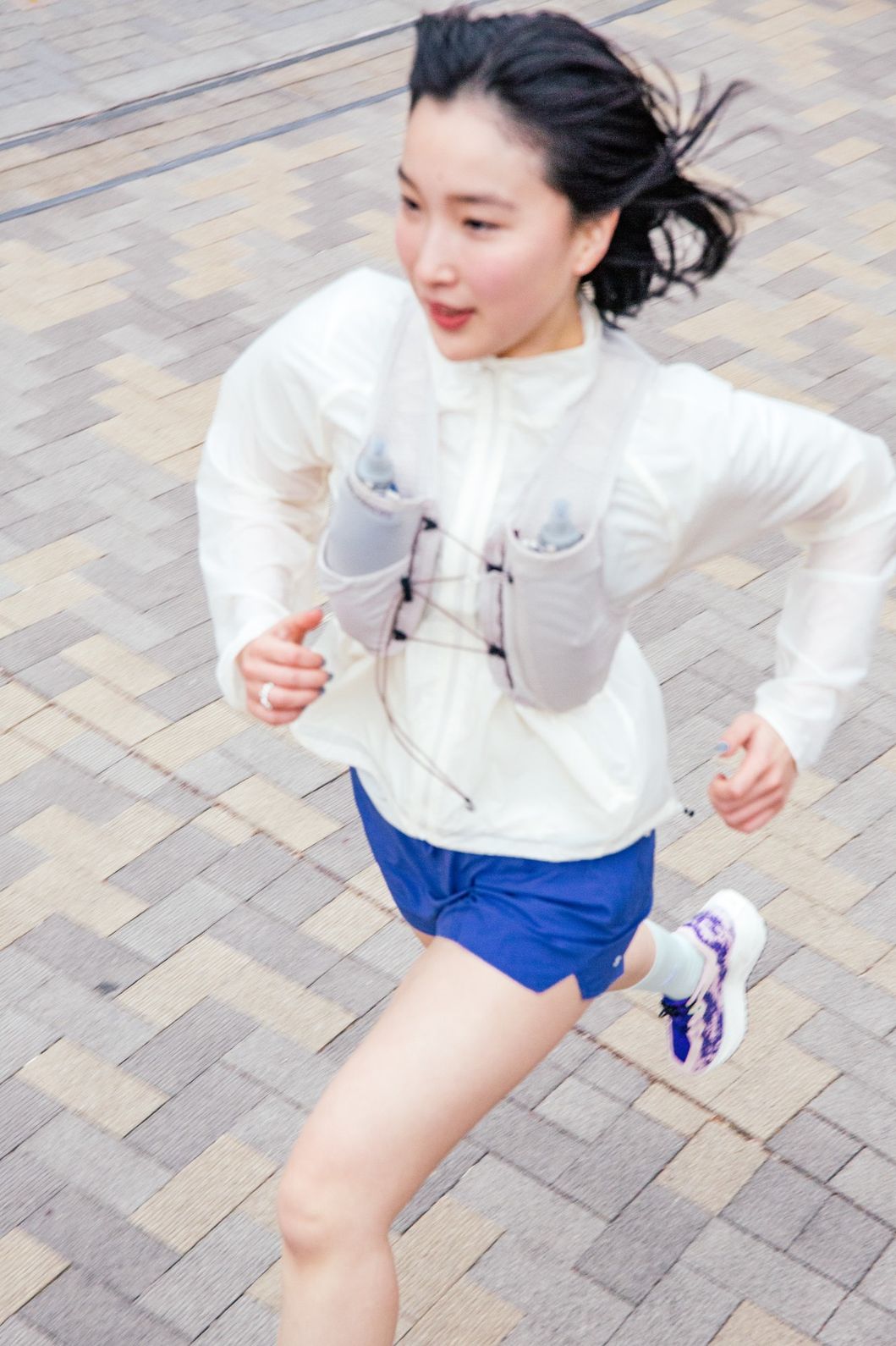
Ask Paul Veillerette, Salomon’s Footwear Designer for performance running, what it felt like to start working on the gravel range and he reaches for an image that tells you everything. “Nobody was talking about gravel in running. It was already big in cycling, but it wasn’t really a thing in running. So it was interesting to build on this blank page.”
The first prototype began life as a road shoe, then was systematically interrogated. What happened if you adjusted the outsole grip pattern? What if you reinforced the upper without over-protecting it? What if the shoe stayed responsive on tarmac but honest on gravel?
The answers produced something genuinely new: a shoe that didn’t ask you to choose your terrain in advance. “So many people, when they tried on the gravel shoes, were like: ‘Oh, this is the perfect shoe for me’,” Paul reflects, “because they go out of the door, they live in Paris, but then they take a left turn and go to the park, or they bring the shoe on their microadventures. We were not expecting that kind of resonance.”
Salomon’s design philosophy – “superior in function, radical in design, obsessive in style” – runs through all of this. The resulting Gravel Running range is ready for everything, everywhere, without asking permission.
A Way Of Thinking, Living, Behaving
For Salomon, gravel is not just a surface or a product, but a mindset – a way of thinking, living and behaving. Running as curiosity. Running as audacity. Running as the permission to follow a path simply because it is there. The people who represent the gravel movement crave the freedom of gravel running to enrich their lives and perfect their craft – as writers and runners, musicians and runners, chefs and runners. People for whom movement is one ingredient among many, not the whole recipe.
In Japan, Kenji Kumaki – a florist who left Tokyo to open a flower shop in Kofu, in the foothills of the Japanese Alps – describes a running life shaped by the same spirit of quiet discovery. His usual route climbs past Takeda Shrine, along gentle rocky slopes and through wooded paths, with a curry-and-coffee spot run by a friend as the destination at the top. One afternoon he turned off into a dense path he had always walked past, drawn by curiosity. Beyond it he found an emerald-green lake and an opening of trail that felt, he says, like another world entirely. “If I hadn’t been running, I would never have found it,” says Kenji. He now carries a small plant field guide on his runs, pausing when a flower or stem catches him. That is the run – not the distance, not the time.
In Tokyo, Haru – a DJ, stylist and brand director – embodies a version of gravel running that doesn’t care for categories. She runs wherever the mood and weather point her that day. Sometimes direction is settled by rock-paper-scissors with a friend: whoever loses picks left or right. “You don’t have to force it. Just try and see,” she says of running in general – a philosophy that maps directly onto what Salomon has always believed about the space between road and trail.

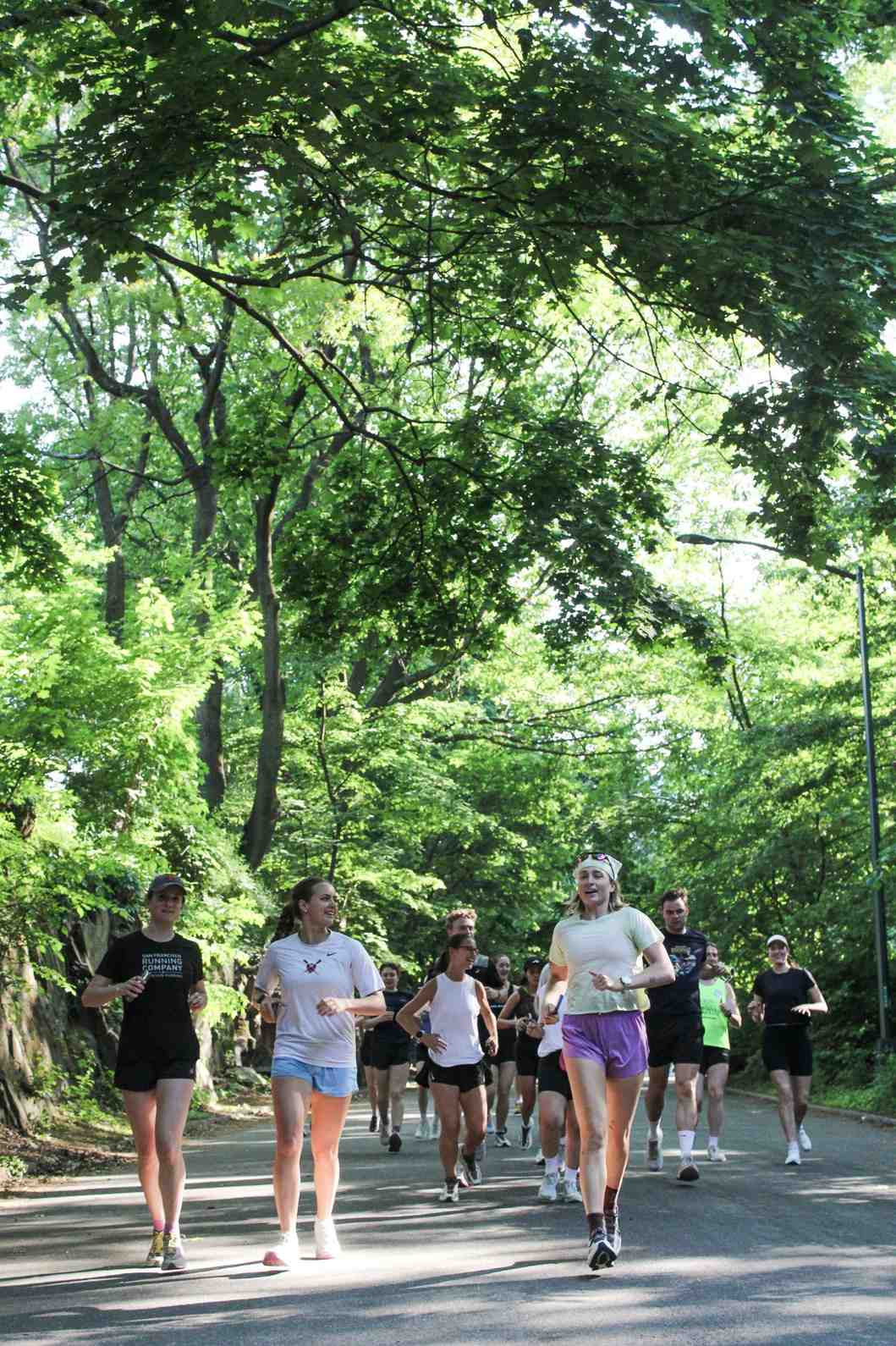
Back to Christian, who organises gravel community runs from his shop. “In cycling, we had this slogan: ‘Run What You Brung’,” he says. “People bringing whatever bike they have on hand – it had this feeling of nothing is wrong; nothing is against the rules.” His own full-moon community runs have adopted the spirit and finish with pizza. “The pace is whatever it needs to be that night.”
Further North in Canada, there are runs that end with a silent disco; in Japan, a run with sauna stops; and in Los Angeles, the Food Run links bakeries and pizza providers on a 13.1-mile tasting route.
Gravelanza: The Movement Goes Live
In 2026, the gravel movement gets its first festival. GRAVELANZA arrives in Paris in June, set in the Meudon Forest on the outskirts of the city. Three unique formats – 7km, 16km and 24km – traverse forest floor, gravel roads and the sweeping terraces of Meudon Observatory.
Unlike a traditional race, where runners disappear into the distance and return hours later, GRAVELANZA is built around a central village – a hub that runners pass through repeatedly, turning the event into something closer to an open-air theatre. There’s live music, food, wellness areas with physiotherapists, product testing, and the specific energy of people who have come together around a shared philosophy rather than just a shared finish line. After Paris, there will be teaser events in London and Los Angeles in 2026.
The format embodies the culture it’s celebrating: the space where things happen – the encounters, the detours, the pauses; the bridge between performance and pleasure. Gravel is the space where those things meet. Something between, and beyond, and entirely its own. ∎
In partnership with

salomon.com